Returning to the lodge after kayaking, we learned that the forecast for the following day was rain, a disappointment since we planned to go hiking.
But we were encouraged the next morning upon throwing open the curtain to see clearing skies and an early ground fog slowly climbing up the mountain, an indication of warming temperature and clearing skies.
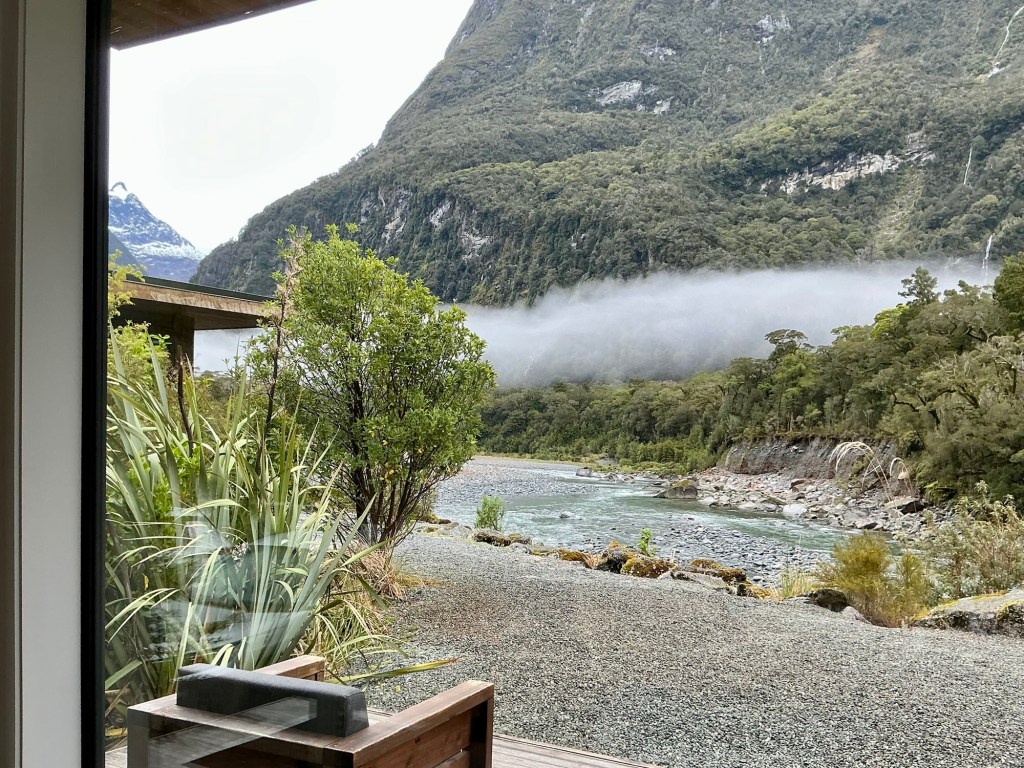
After a leisurely breakfast, we packed up and drove back to Deepwater Sound to catch the water taxi to Sandfly Point, the northern terminus of the Milford Track.
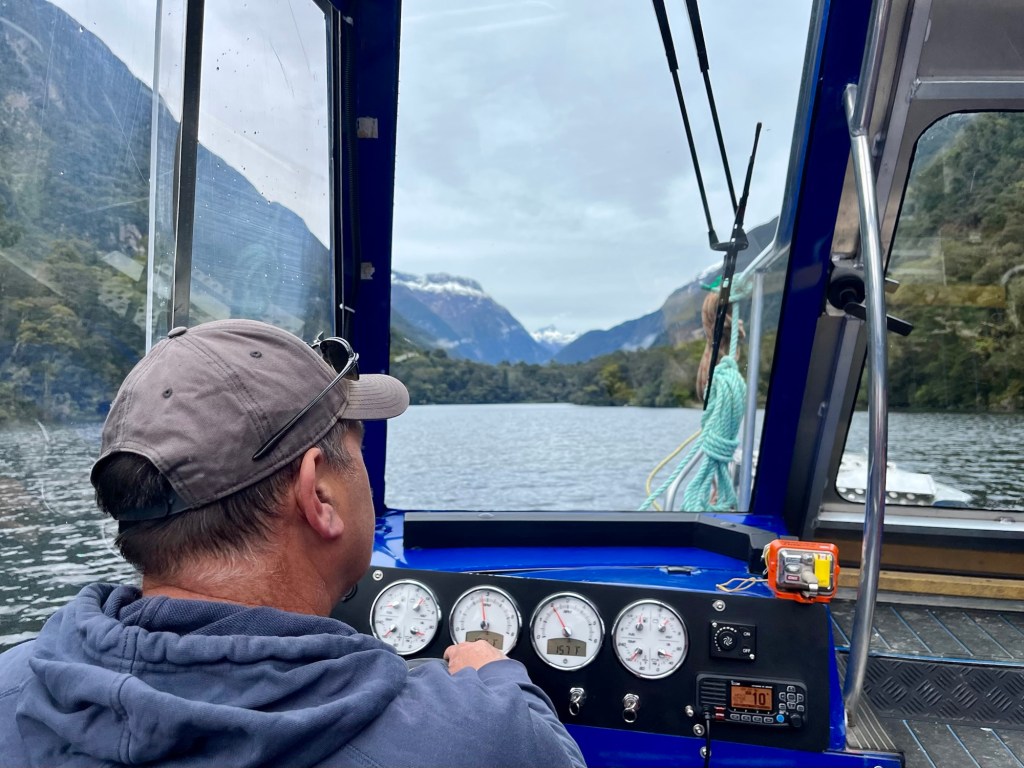
Hikers making the full four-day, 33-mile long trek from the headwaters of Lake Te Anau to Sandfly Point must register with the New Zealand Department of Conservation.
During the season, only 90 hikers are allowed to begin the trek daily, all of whom must hike south to north (from lake to sound), stopping and sleeping only at designated shelters.
As day hikers, we did not need a permit and could hike in-and-out, north to south.
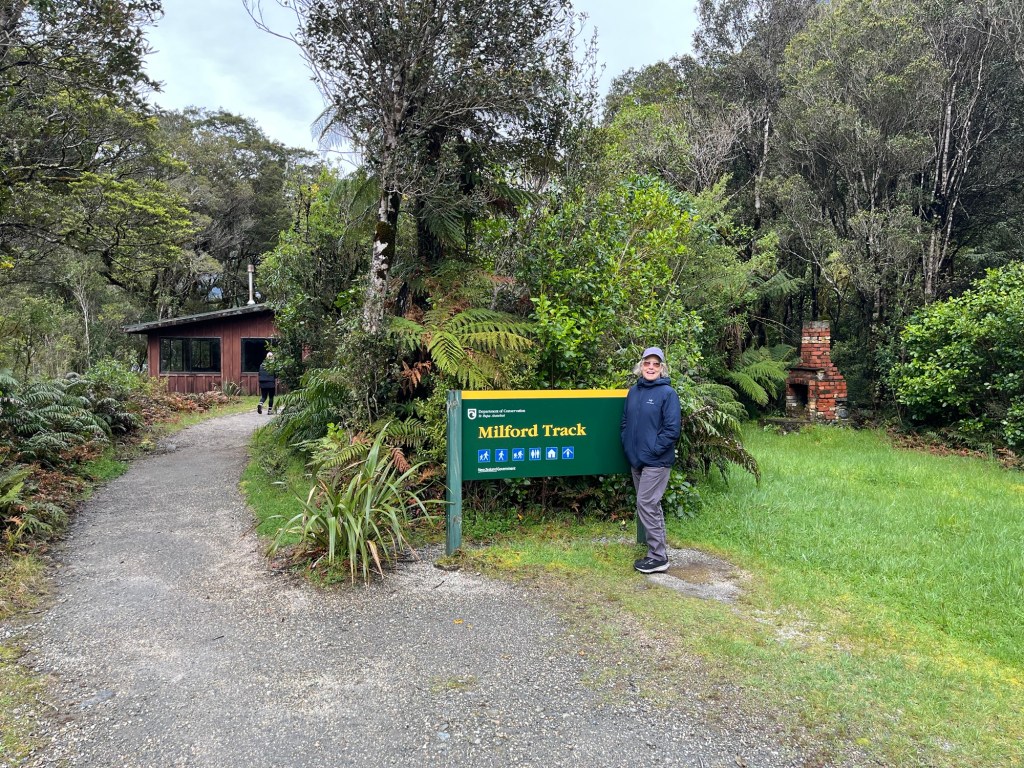
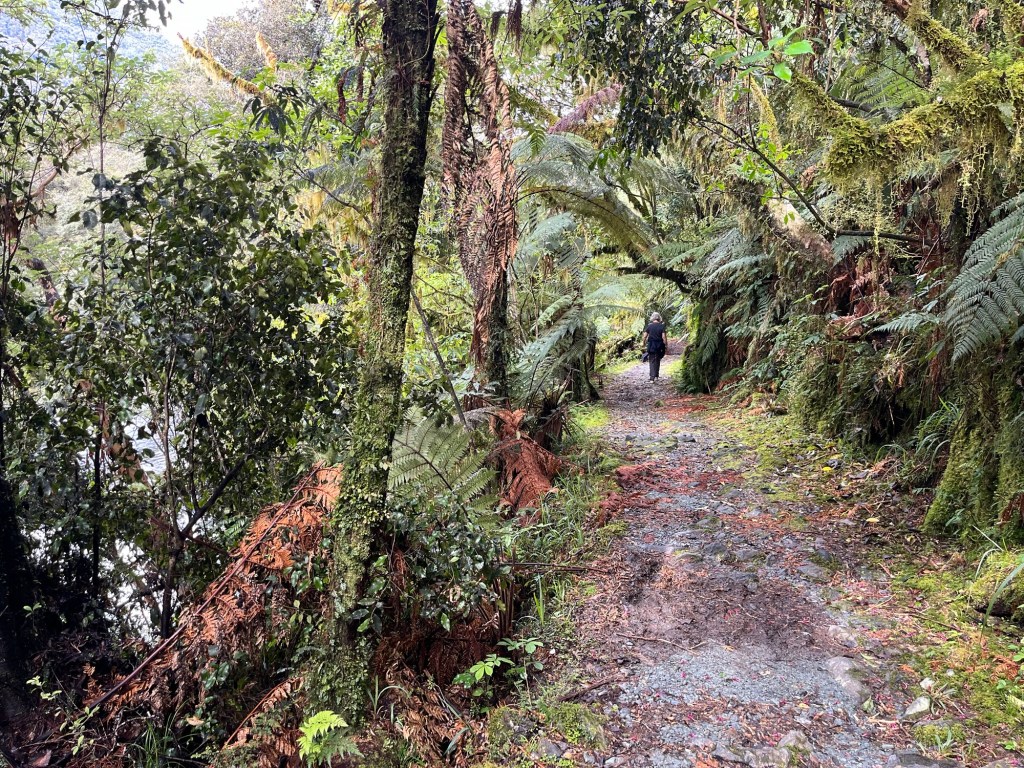
The trail in the northern section of Milford Track, where we were, meanders through a temperate rain forest. For the first mile, the Track at this end is improved, although we did encounter a few obstacles, casualties of the recent storm.

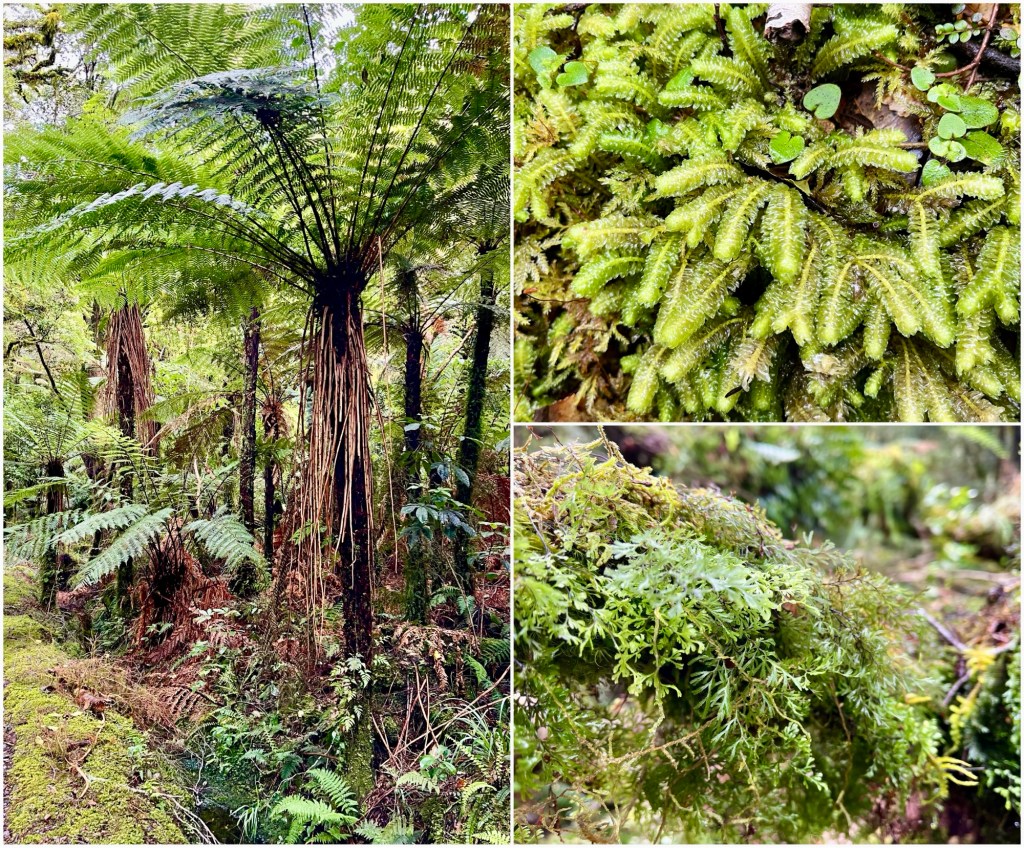
The vegetation and climate were reminiscent of the Hoh Rain Forest in Olympic National Park in Washington State near where we live part of the year: lots of ferns and moss-covered trees, mostly beech.
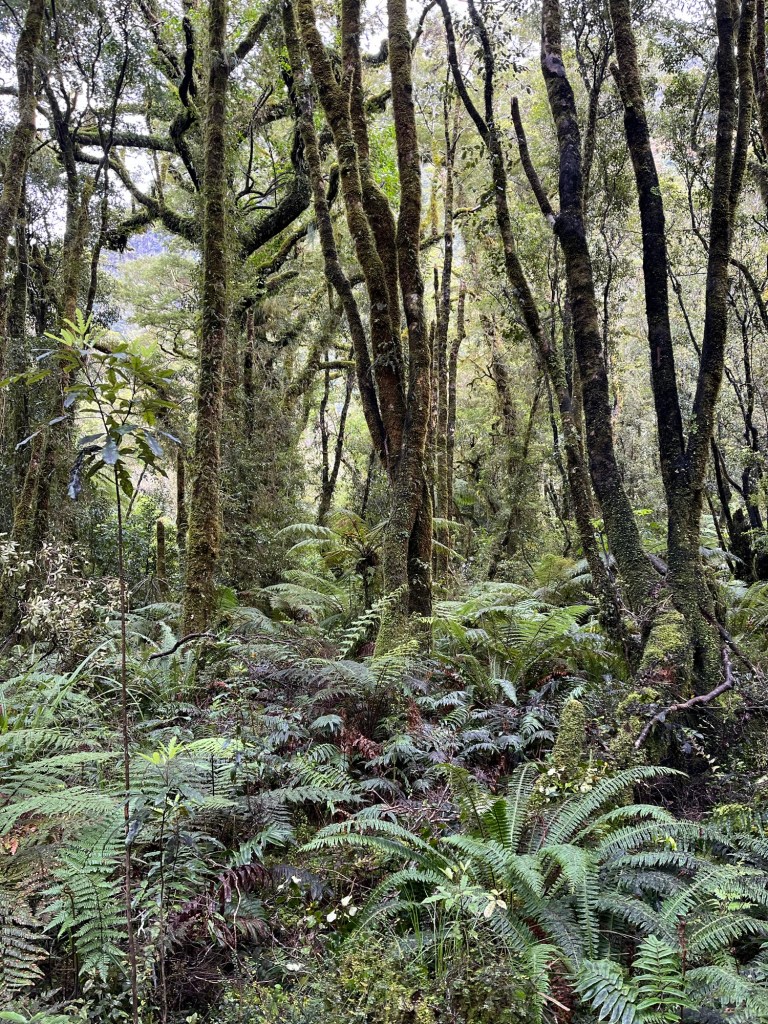
Dale was in plant heaven, snapping photos of unrecognized plants for later identification.
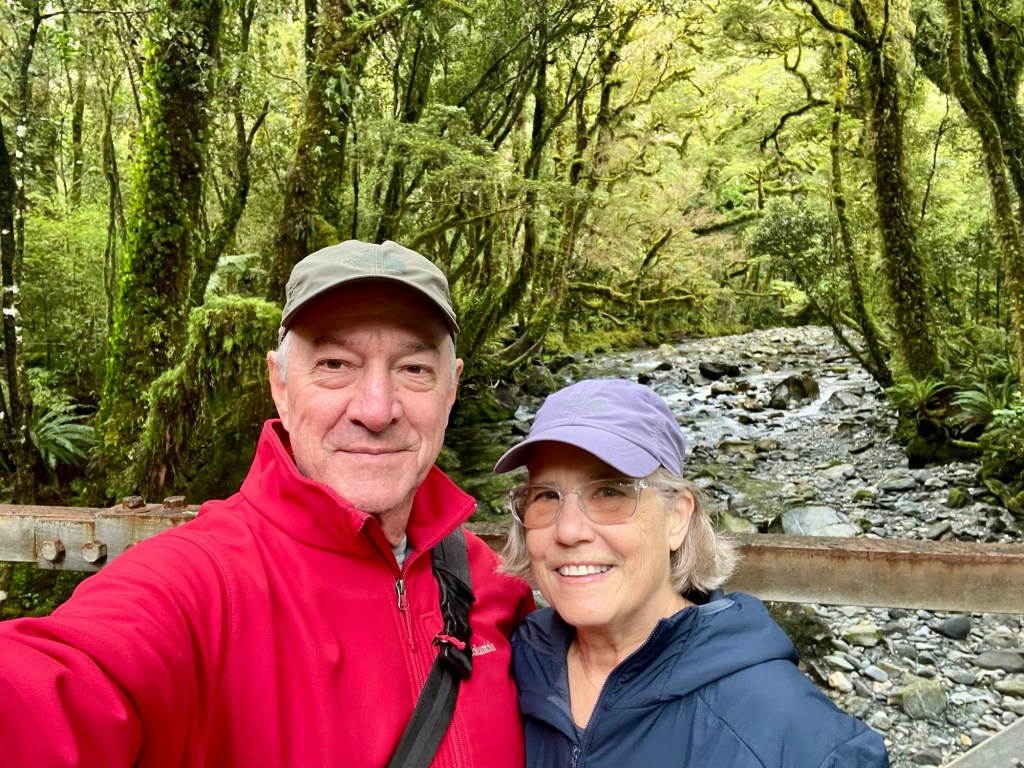
We stopped to take a self-portrait on the bridge over Camp Oven Creek.
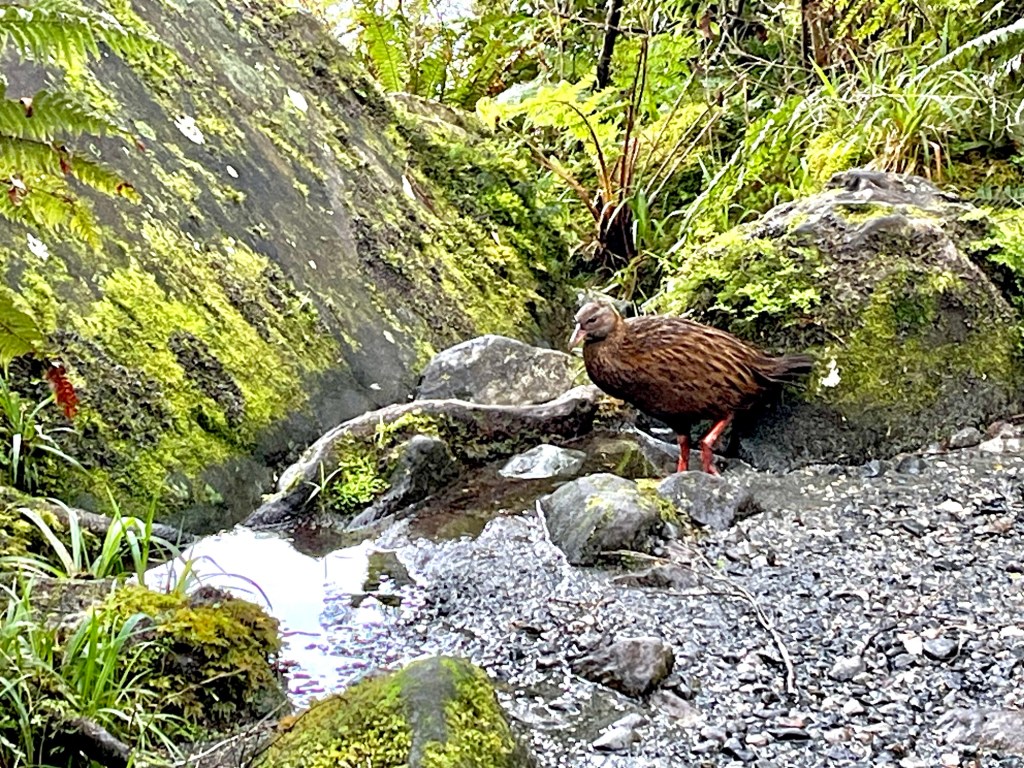
Just beyond the bridge, we came upon the bird in the photo below, a woodhen, known locally as a weka (its Maori name).
I know this because I showed the photo later to the captain of another water taxi who told me, in her lovely, sing-song Kiwi accent, that it was a “wicker.”
“A wicker?” I repeated, making a mental note in order to read about it later.
“Ye-ah, mate, a wicker,” she confirmed.
It took a while to find it on the internet.
The weka is one of New Zealand’s flightless birds, about the size of a chicken. Like the kea we had recently encountered, it didn’t fear us in the least.
We continued as the path gradually became more rugged, passing Lake Ada to our left.
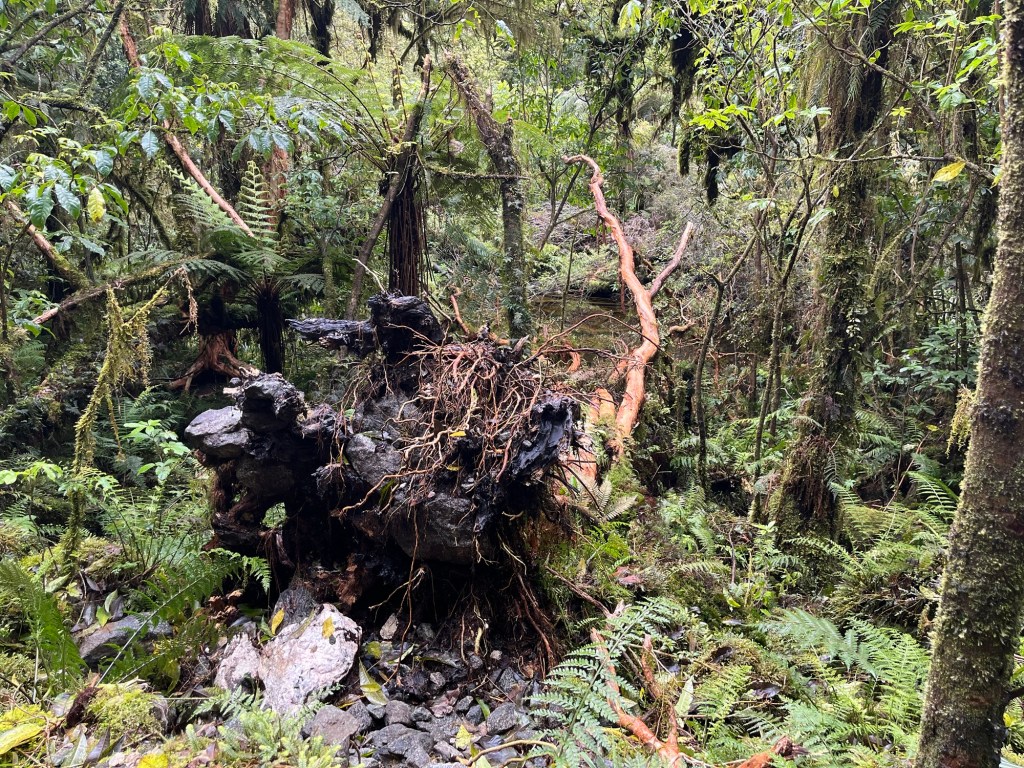
In the photo below of the rootball of a toppled tree, you can see why landslides in Milford Sound bring down so much of the surrounding vegetation.
When we finally emerged from the rain forest at about 2.5 miles, we stopped to take in the adjacent scenery. The water from these waterfalls converge to form a stream…
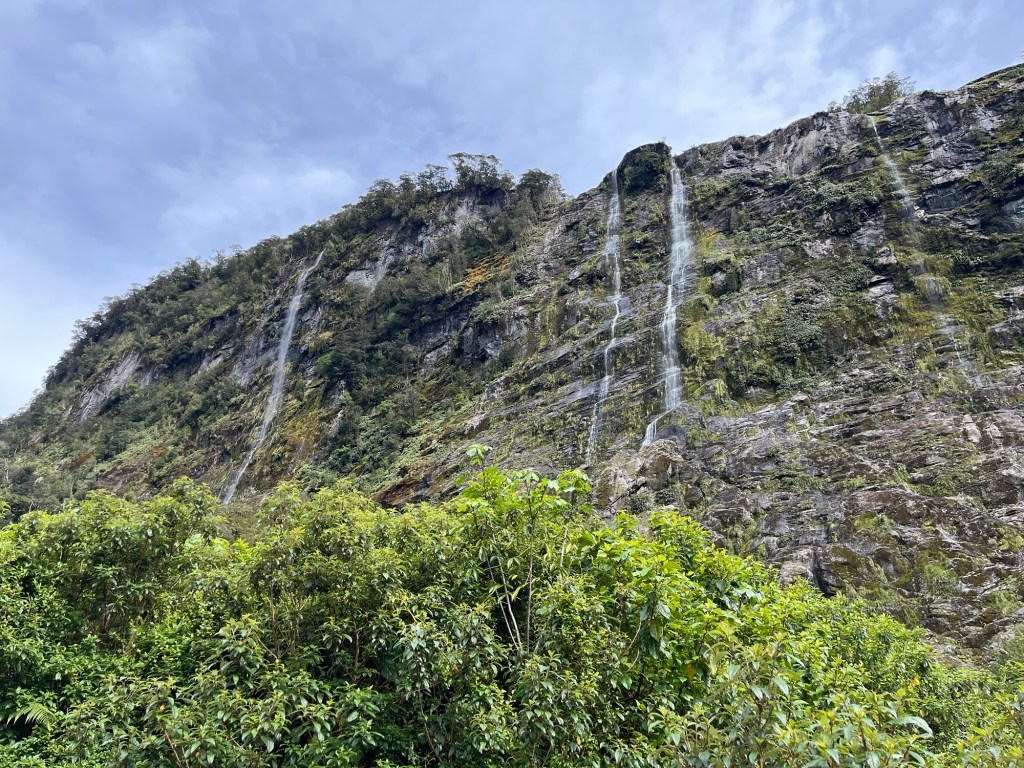
… that we crossed…
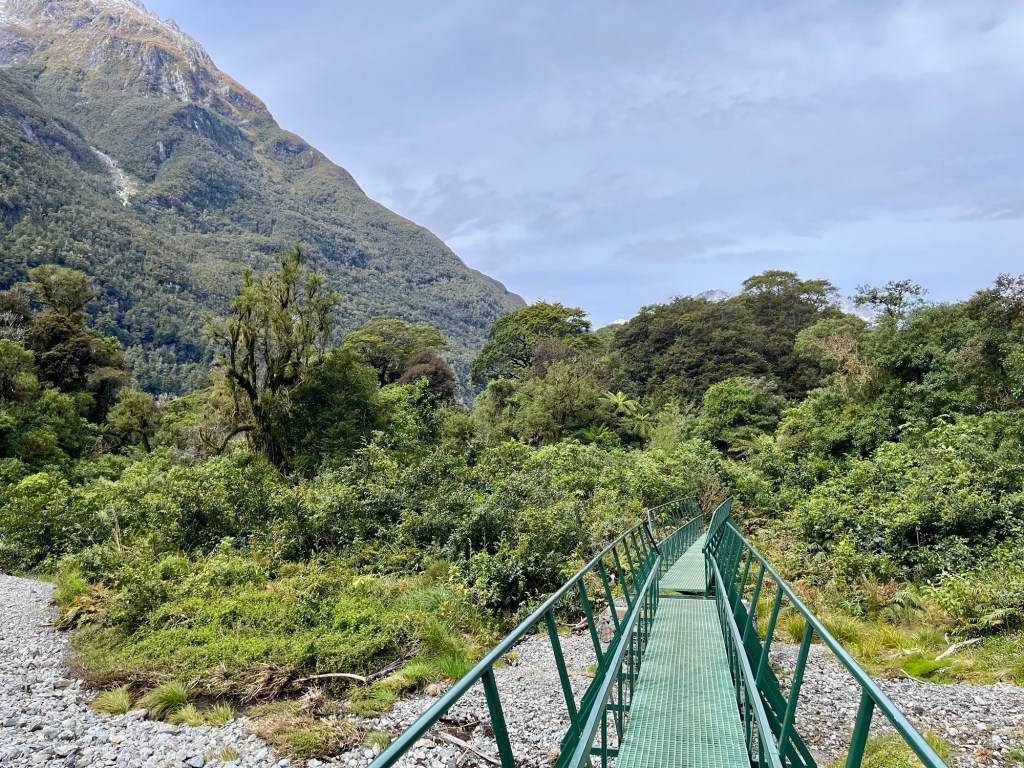
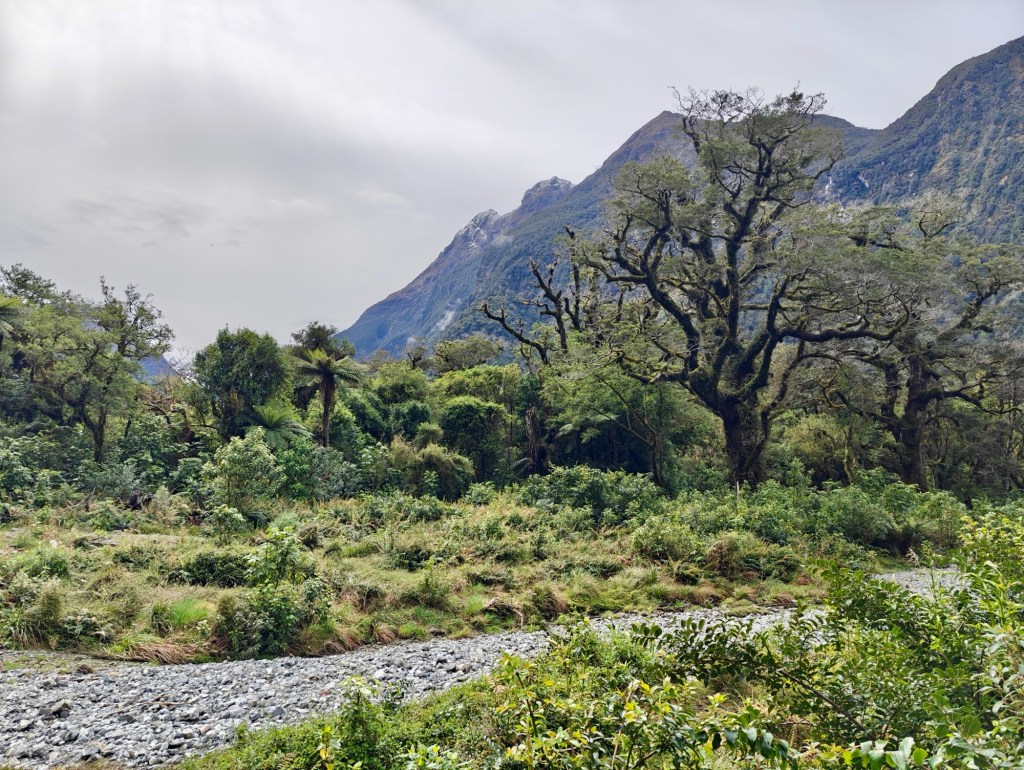
… stopping on the other side to take the photo, below, of a large, gnarly silver beech tree, before continuing about another 1/4 mile, then turning around.
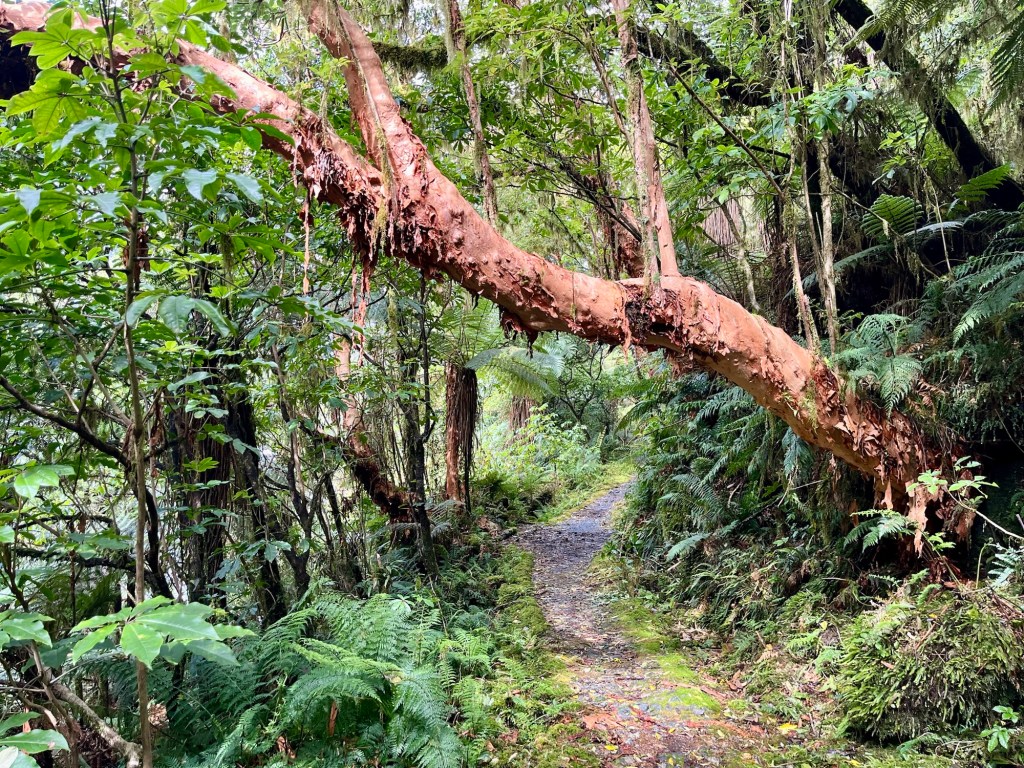
On the way back, we paid more attention to the tree below with the peeling bark. It is the New Zealand fuchsia, known locally as the kōtukutuku.
We have a similar looking tree in Washington State called the Pacific madrone, but it’s not in the same family, the kōtukutuku being deciduous, whereas the madrone is, surprisingly, an evergreen.
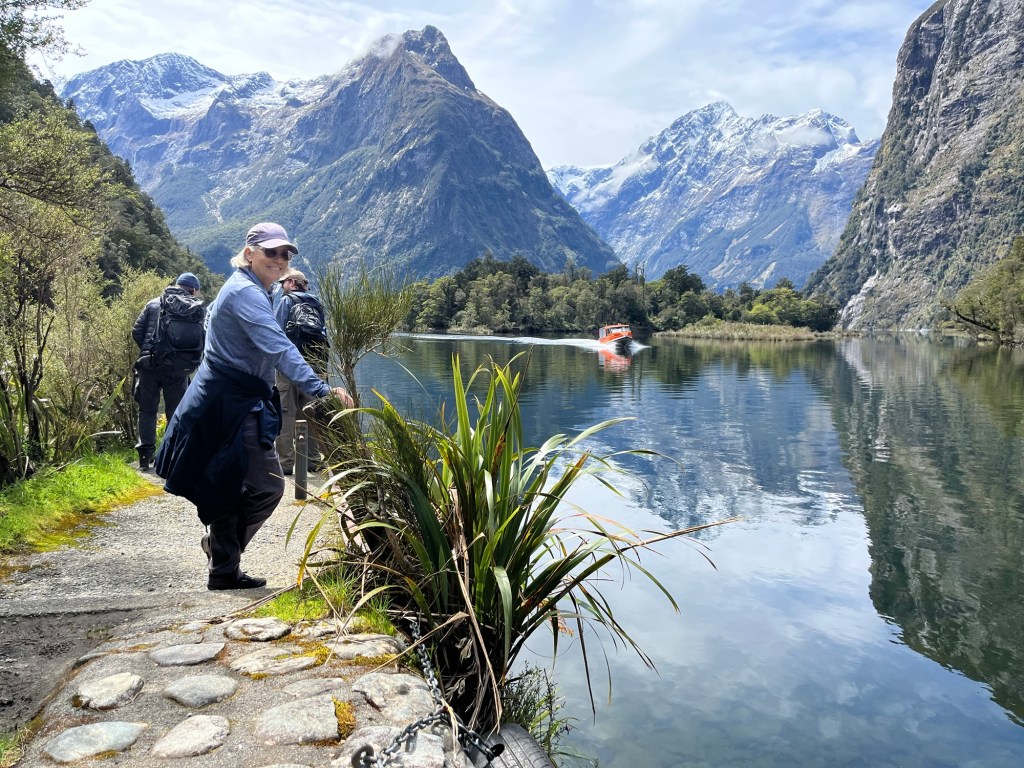
We picked up our pace in an attempt to catch the 12:30 water taxi and made it to Sandfly Point with time to spare. Our walk was 5.5 miles “return” (round-trip) as they say here in New Zealand.
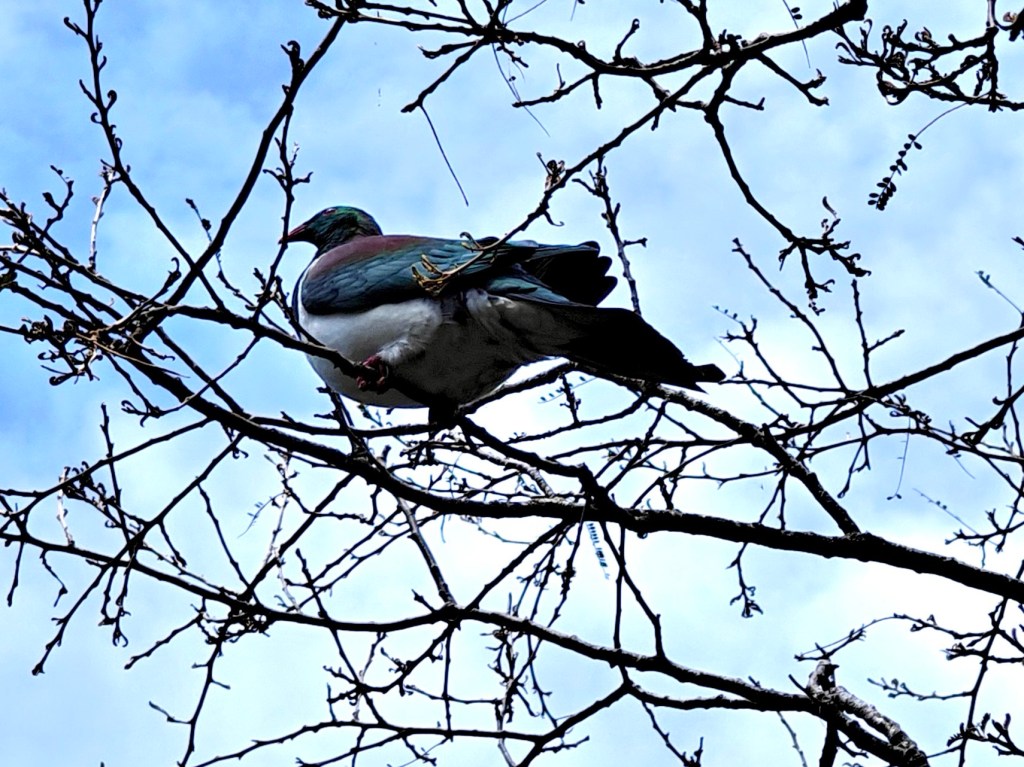
While we lounged around waiting for the boat, we noticed a colorful pigeon overhead. This is the kererū, also known as the wood pigeon. It was fun watching her inch out on the branch to reach the remaining berries.
Soon, our water taxi appeared, welcoming us back aboard.

We had checked out of the lodge before leaving for our hike, so once back in Deepwater Sound, we started our drive back to Te Anau and our next excursion, the following day: a boat ride to the Tasman Sea through Doubtful Sound.
 The Road Less Traveled