In 1905, my favorite U. S. President, Teddy Roosevelt, gave ten North American Elk to the then-British Colony of New Zealand (the islands became a British dominion in 1907 and an independent nation in 1947). They were released into the wild midway between Milford and Doubtful Sounds, together with an additional ten purchased by the colony.
New Zealanders renamed these white-tailed deer Wapiti, the Native American word for white. The herd grew in numbers and in 1923 the dominion government issued the first hunting licenses for the Wapiti. As can be seen in the photo, below, Wapiti grow tremendous antlers, which they loose annually.
By the 1970s, the herd had become so large that the national government authorized hunting by helicopter (just as Sunni said), declaring the Wapiti to be a “noxious animal.” By the 1980s, the government adopted a policy to capture and relocate the herd from Fiordlands National Park to a farm near Te Anau that was conveniently owned by the Prime Minister, Sir Robert Muldoon.
Due to public outcry, part of the herd was left in Fiordland where they continue to be popular quarry for local hunters, including, apparently, the owner of our favorite place to have breakfast in Te Anau, the Wapiti Bakery & Cafe, shown in the top two photos, below.
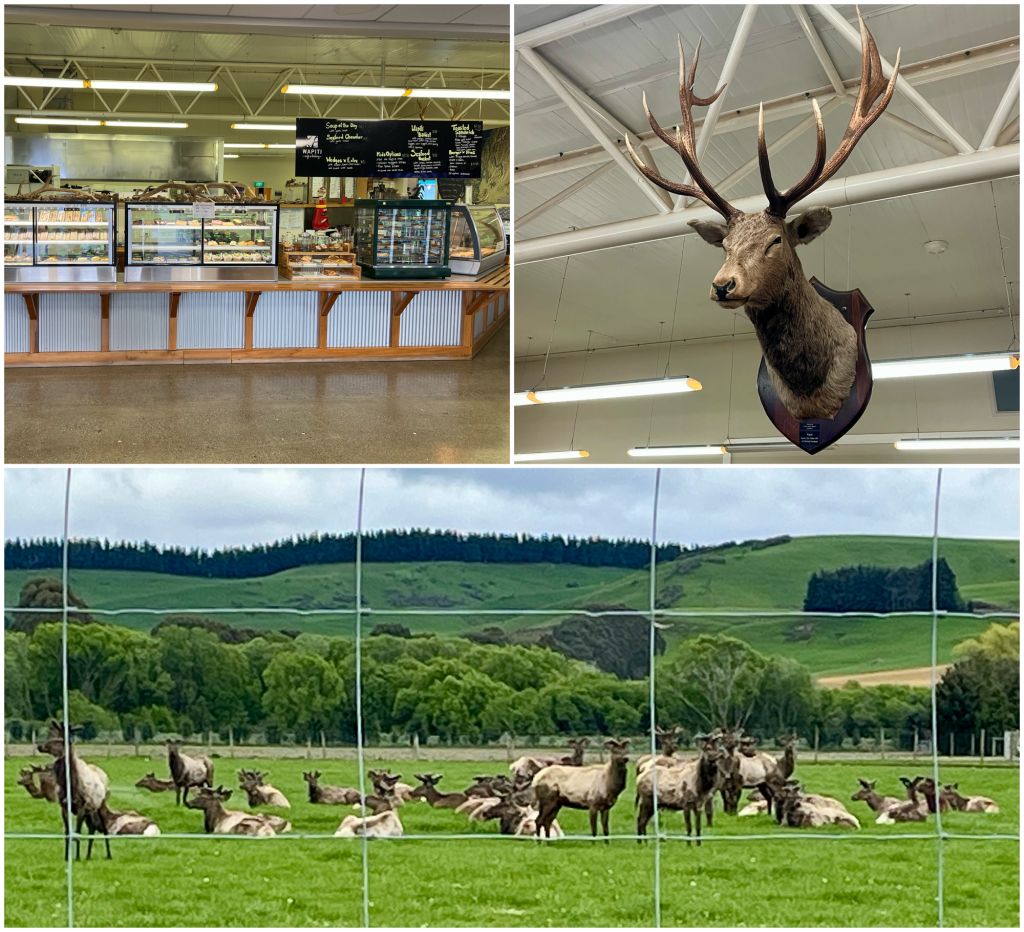
We passed several corralled herds of Wapiti on our drive out of town on Thursday.
It’s about a 270-mile drive from Te Anau to our destination in the middle of the South Island, Aoraki/Mount Cook National Park.
Before leaving Te Anau, however, we stopped to take a photo of its namesake lake, Lake Te Anau, the second largest lake in New Zealand and the biggest on the South Island:
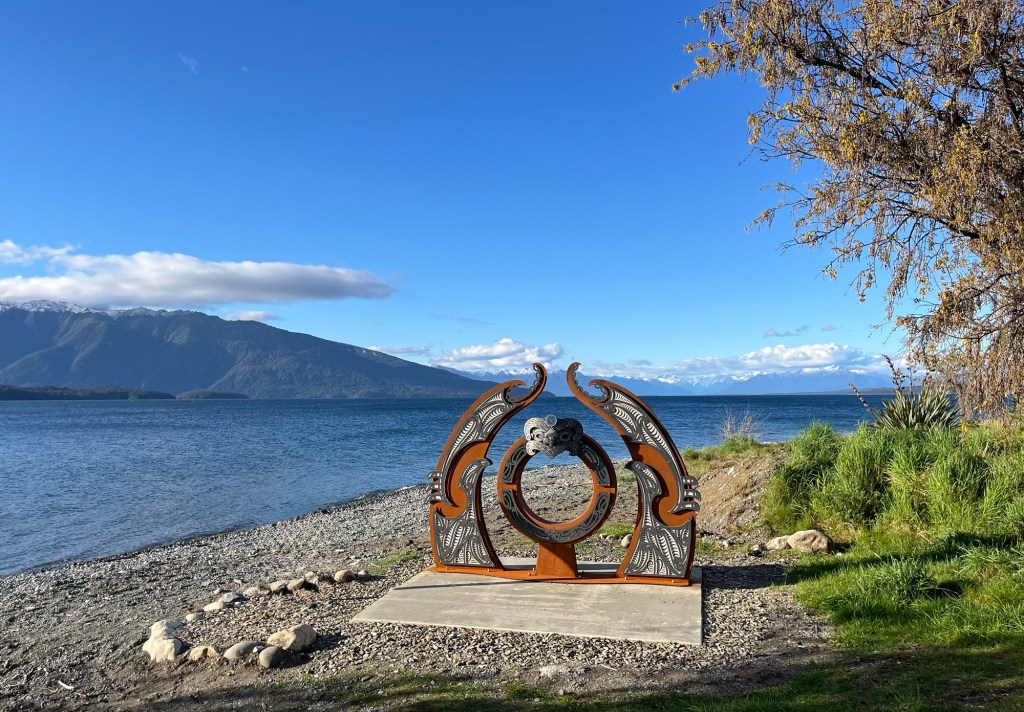
Rather than rush it, we decided to split the drive in two, stopping just beyond Queenstown in Cromwell.
Here’s what the drive looks like north of Cromwell:
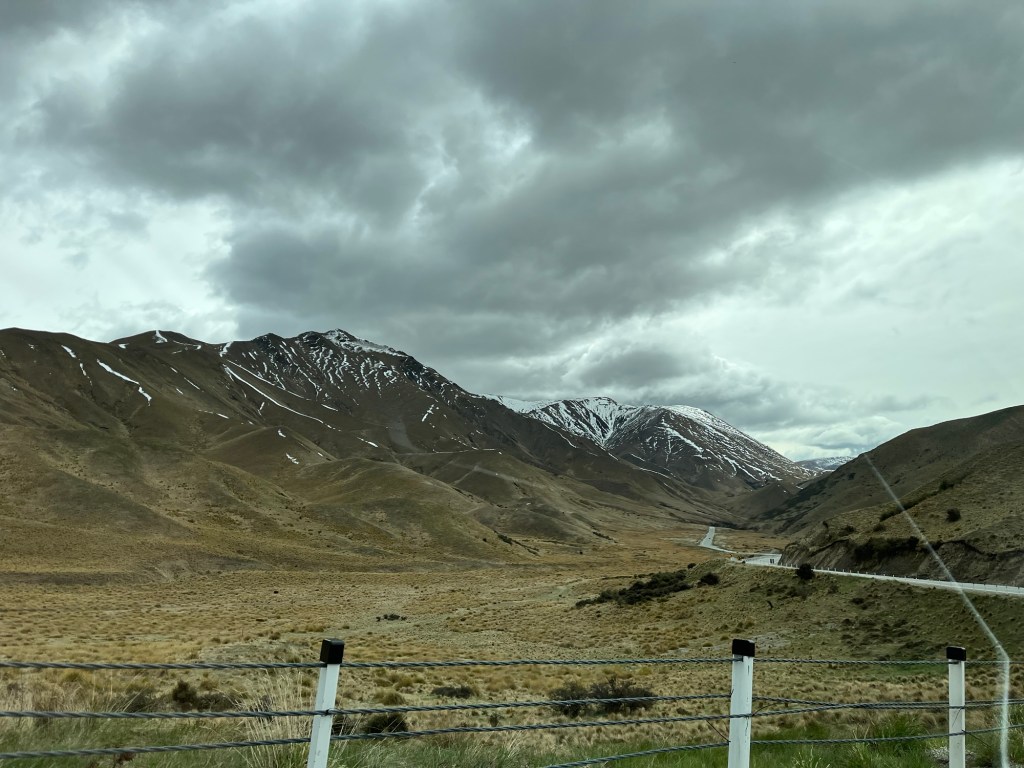
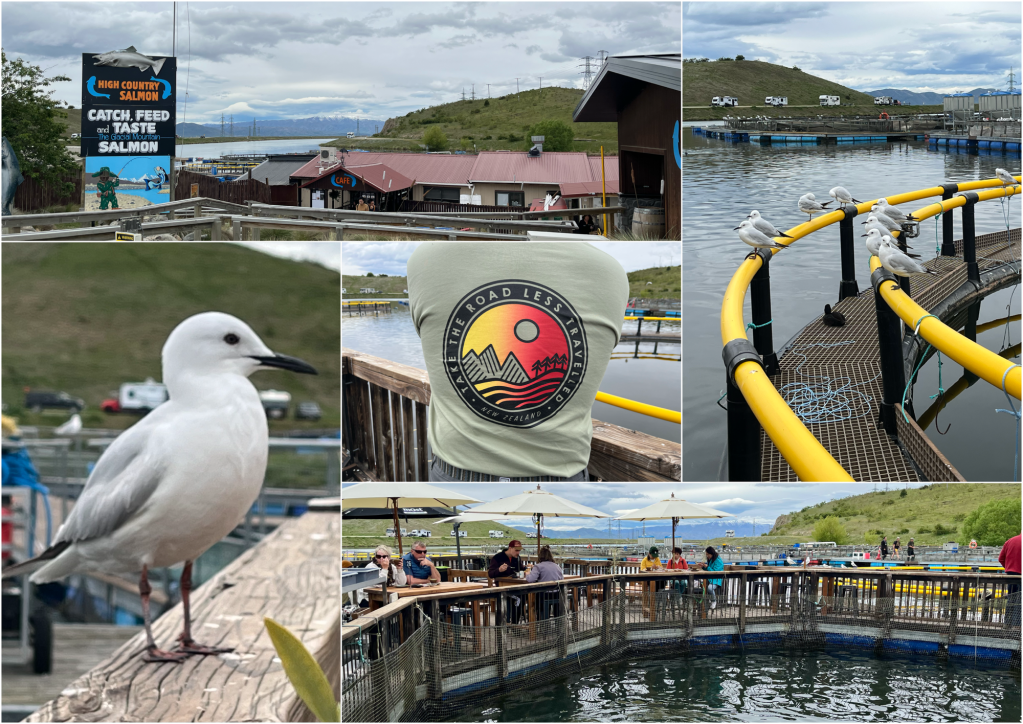
We stopped for lunch at one of the few restaurants along this stretch of highway, High Country Salmon. They farm, process, prepare and ship salmon around the world. They also serve it any way you’d like it. We had sushi and sashimi.
[I bought a souvenir shirt in Te Anau that I’m showing off in the center of the photo.]
The mountains were beginning to make an appearance. This is the southern end of the Ben Ohau Range as we traveled north:

I think that’s Mount Ward in the background.
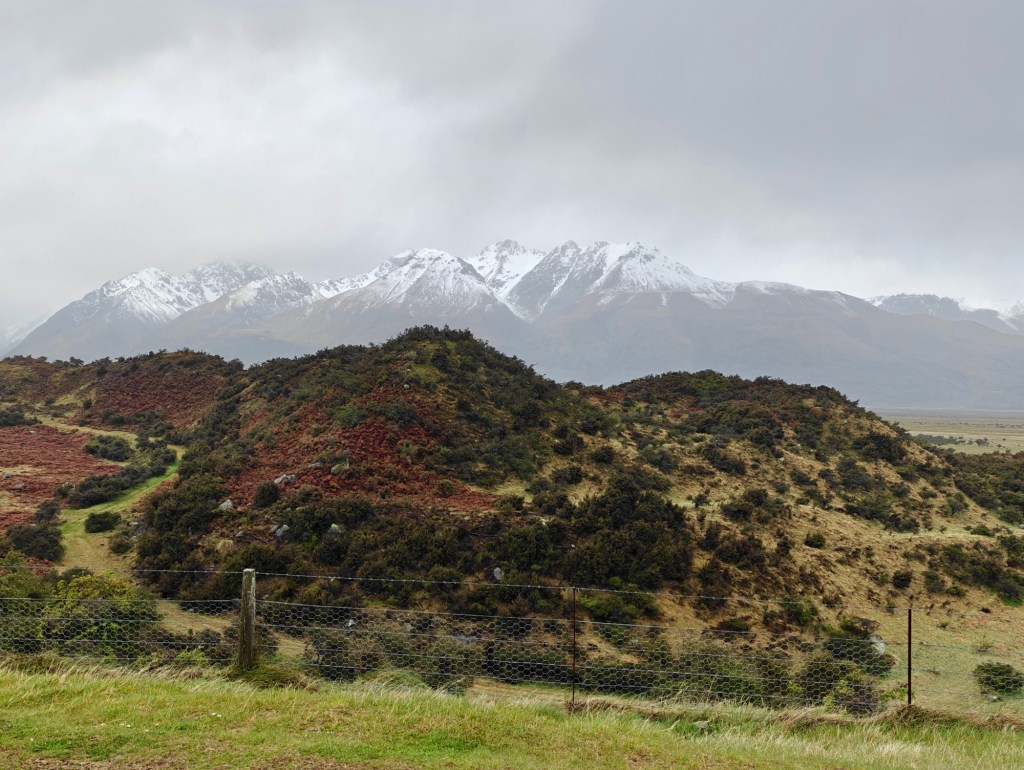
Mount Sefton?

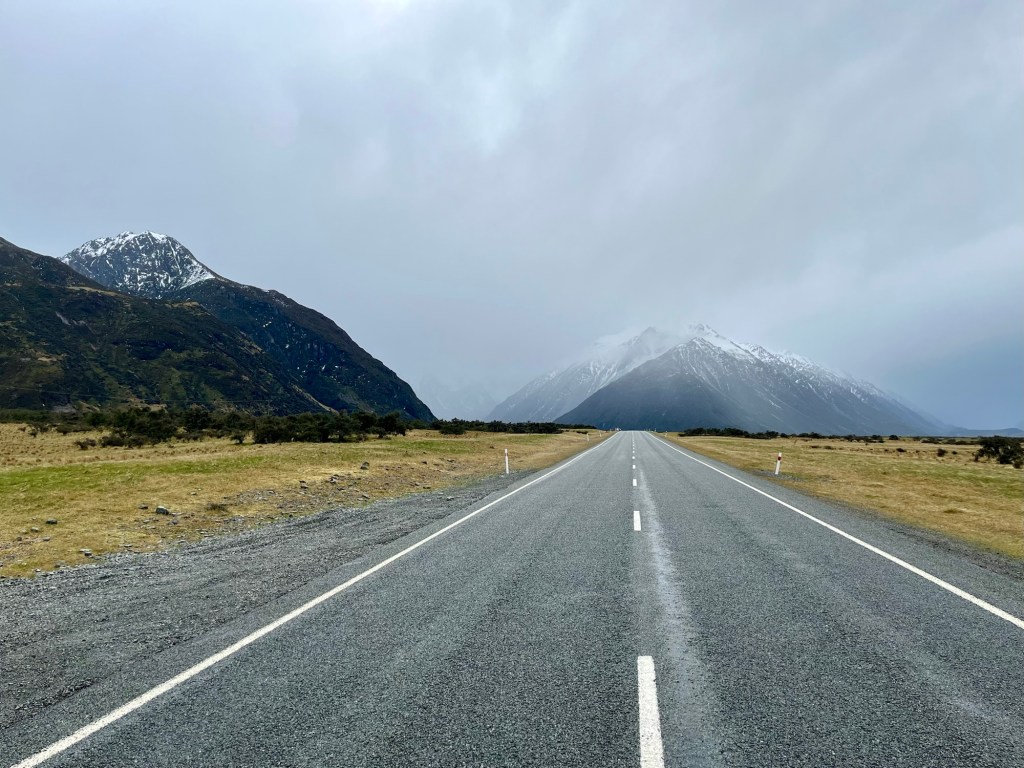
The road finally veered to the northwest toward Mount Cook. Almost there.
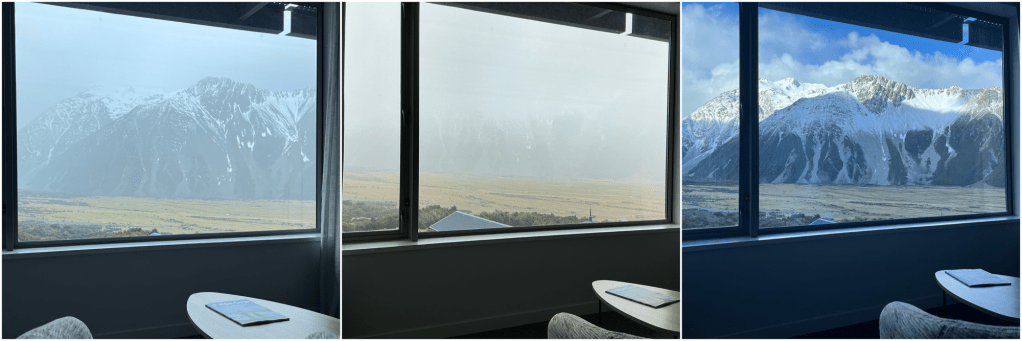
We’re staying at The Hermitage Hotel, right in the heart of Aoraki/Mount Cook National Park. All the rooms in our building face the Southern Alps and have this view:

A cold front was approaching as we arrived and the view slowly deteriorated. On the left is what it looked like when we checked in at 2:30 p.m. Friday. The middle picture is what it looked like at 10:45 a.m. the next morning, Saturday. But by 6:00 p.m., the front had mostly gone by, opening up the view, as shown on the right.
Mount Cook was supposed to be visible from our room, but weather obscured it until 8:00 p.m. Saturday evening. Suddenly, it appeared in full view. That’s it in the background, below.
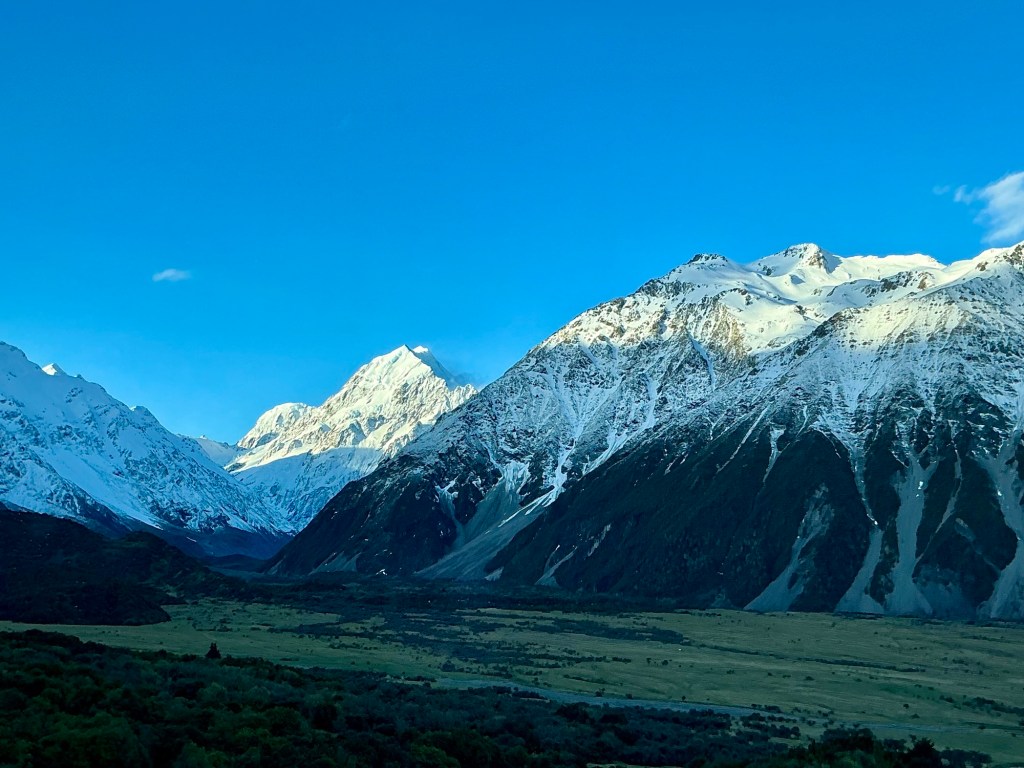
Mount Cook (elev. 12, 218 feet) is the tallest mountain in all of New Zealand. Its Maori name is Aoraki, which loosely translates to “Cloud Piercer.”
Sir Edmund Hillary (1919-2008), the first to climb Mount Everest in the Himalayas (1953), got started in mountaineering here with his first major ascent, scaling Mount Cook from the South Ridge to the Low Peak in 1948. The South Ridge was later renamed Hillary Ridge in his honor.
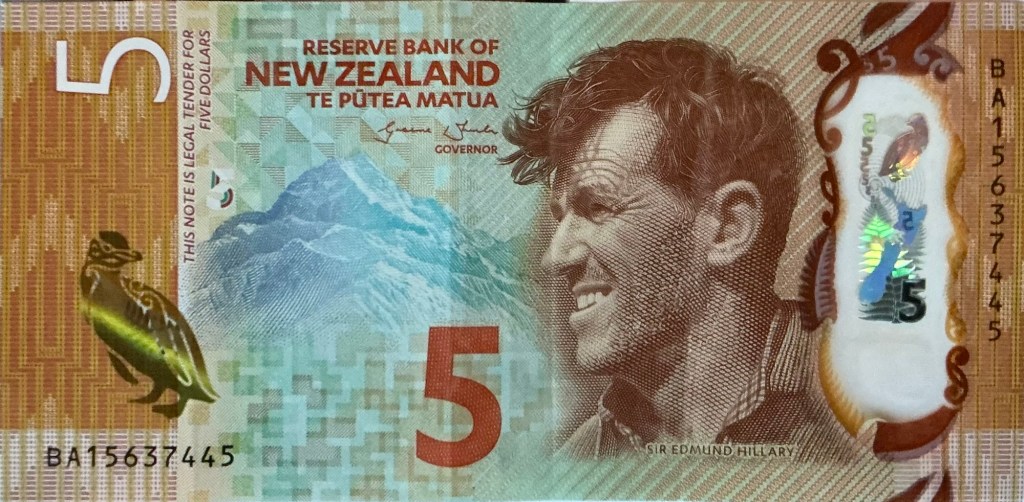
There’s a museum dedicated to Hillary’s life here at The Heritage Hotel. I have a souvenir of Hillary: a New Zealand Five dollar bill. I guess that would make him New Zealand’s Abraham Lincoln.
 The Road Less Traveled