We spent Sunday night in Penjikent, a city of about 35,000, making it the tenth largest city in Tajikistan by population, a small town by American standards.
In the morning, we headed out to see the nearby ruins of ancient Penjikent, a Sogdian city-state abandoned in 722 AD when the Arabs invaded.
On the way out of town, we stopped at the monument to King Samani. Ismail Samani (849-907 AD) is generally regarded as the founder of Tajikistan, having united the various Sogdian city-states in the region into a single dynasty in 892 AD.
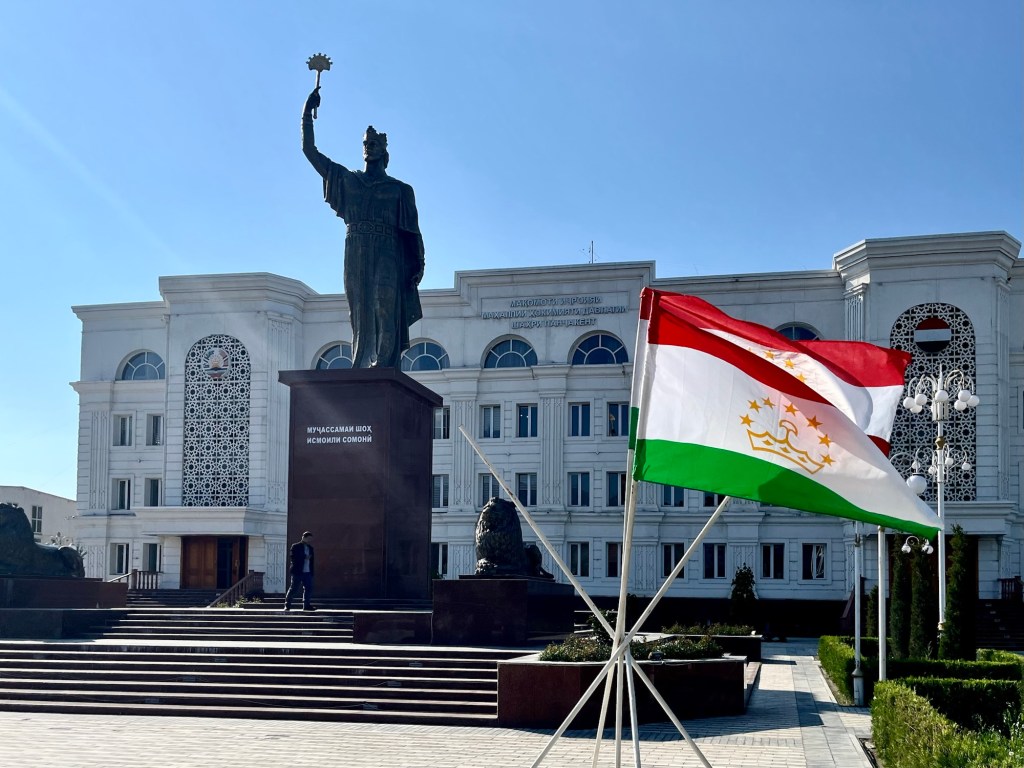
The Sogdians were an ancient people whose history goes back to the Bronze Age. During the first Persian Empire (the Achaemenid period, 550-330 BC), the Sogdians were nomadic. They didn’t settle and flourish until 400 AD when they established trading settlements along the Silk Road between China and Byzantium (today’s Turkey).
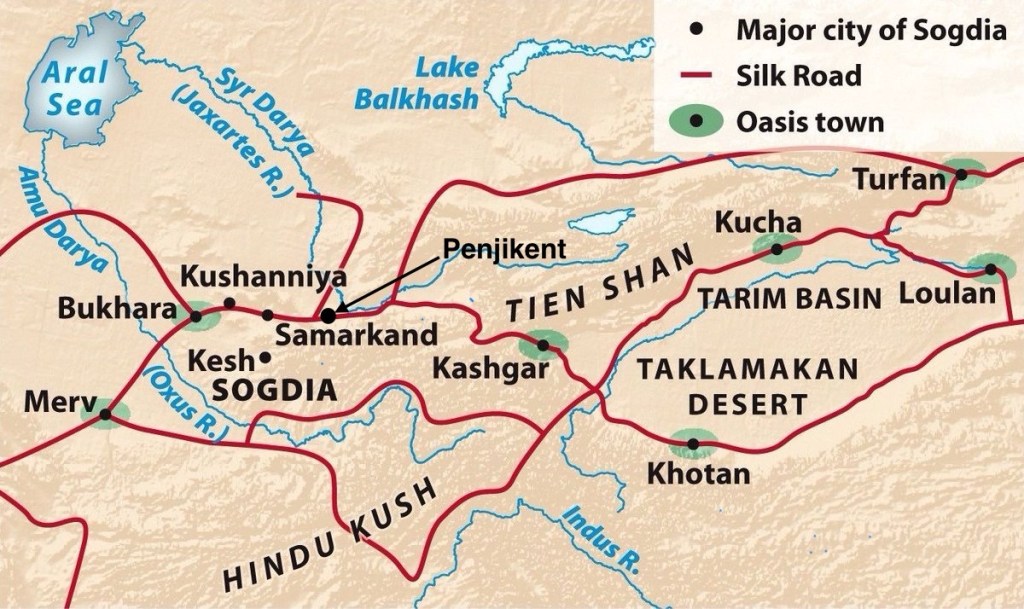
Contrary to what you might think, the Silk Road was not a single track. It consisted of numerous trading routes connecting the Orient with the Mediterranean, as shown on the map below.
Since the trading routes crossed isolated and barren steppe lands and deserts, traders needing staging points as they moved their caravans of heavily laden Bactrian (two hump) camels along the route. These fortified “rest areas,” called caravansaries, often developed where there was a water source – an oasis. They were often spaced a day’s journey distant from one another.
Sogdian settlements of all sizes developed along the routes and the larger of them evolved into independent city-states. Ancient Penjikent was one of them, ideally located between Samarkand and points east, in a valley through which all traders had to travel, regardless of whether they were following the route on the north or south side of the Tian Shan Mountain range.
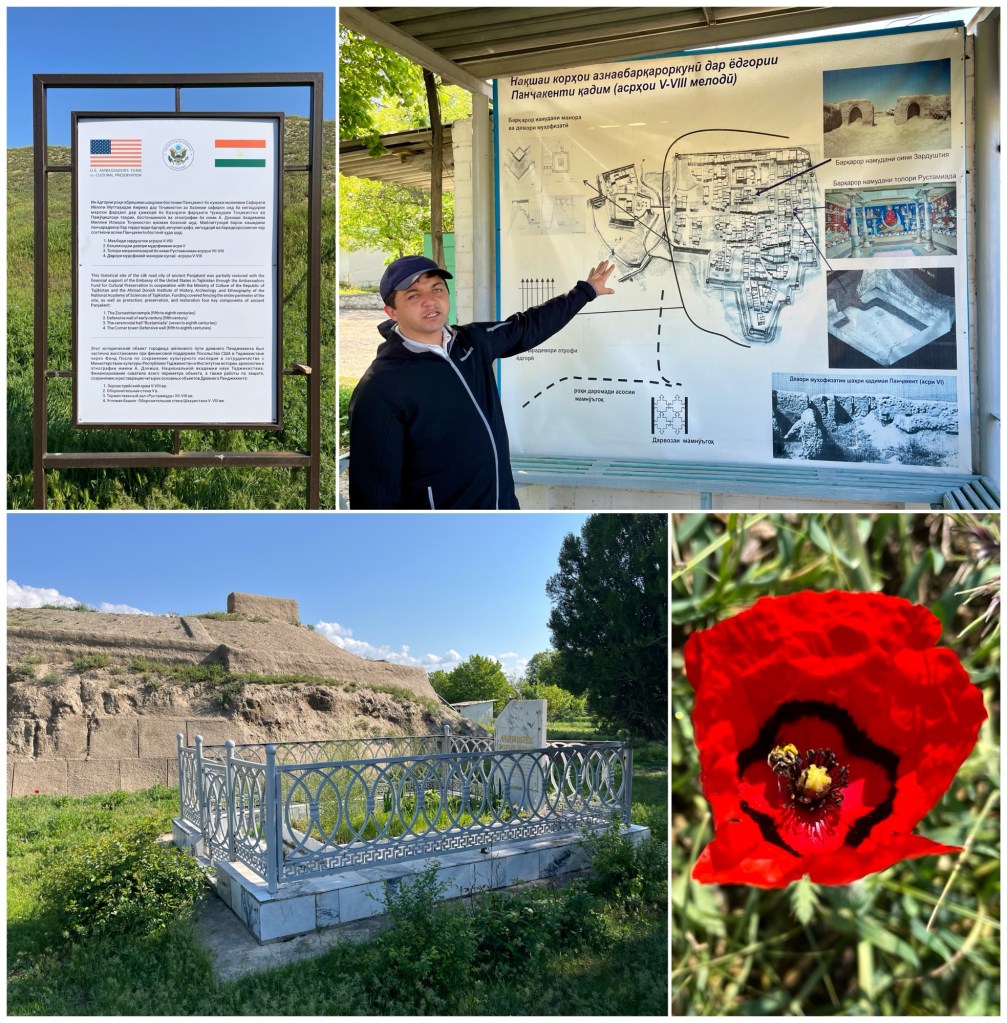
Archaeologists uncovered ruins and relics establishing that ancient Penjikent was built around 400 AD, but was no longer inhabited by the mid-700s. Unlike most other early settlements in central Asia, ancient Penjikent was abandoned in haste when the marauding Arabs arrived and was never reinhabited.
There is very little in the way of visitor facilities at the site today, other than a map of the ruins, a sign saying that reconstruction was partially financed by the U.S.A., and the grave of the lead Russian archaeologist for the dig, which commenced in 1946. The area was also sporadically populated by poppies.
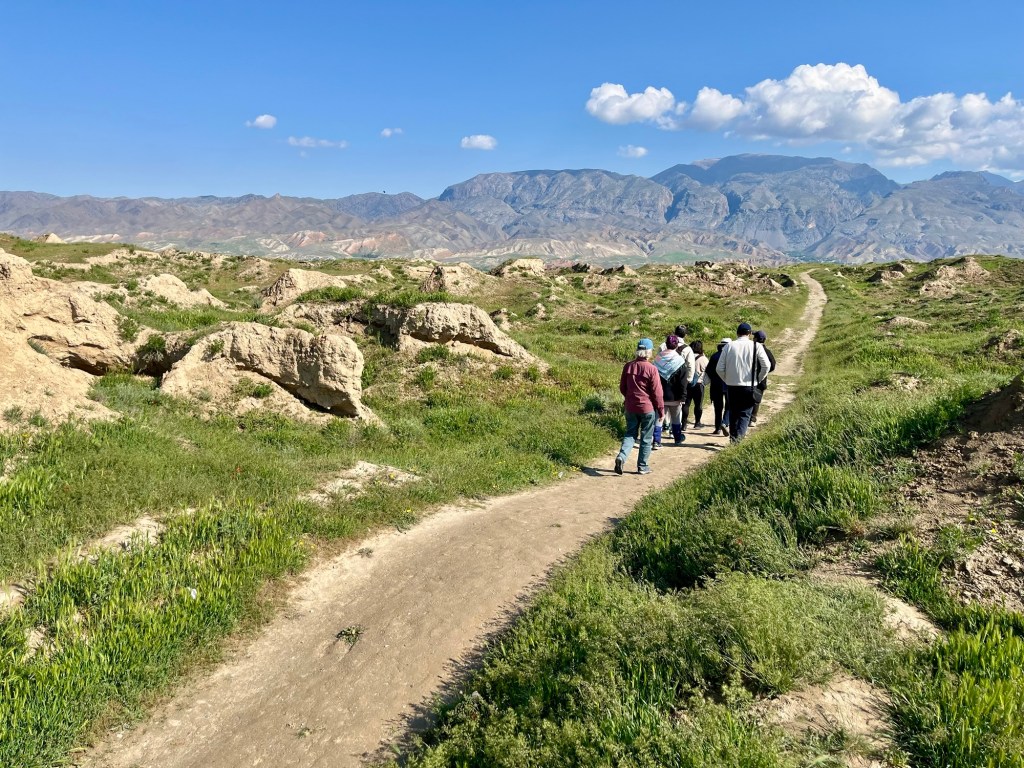
We entered at the South Gate of the exterior defensive wall.
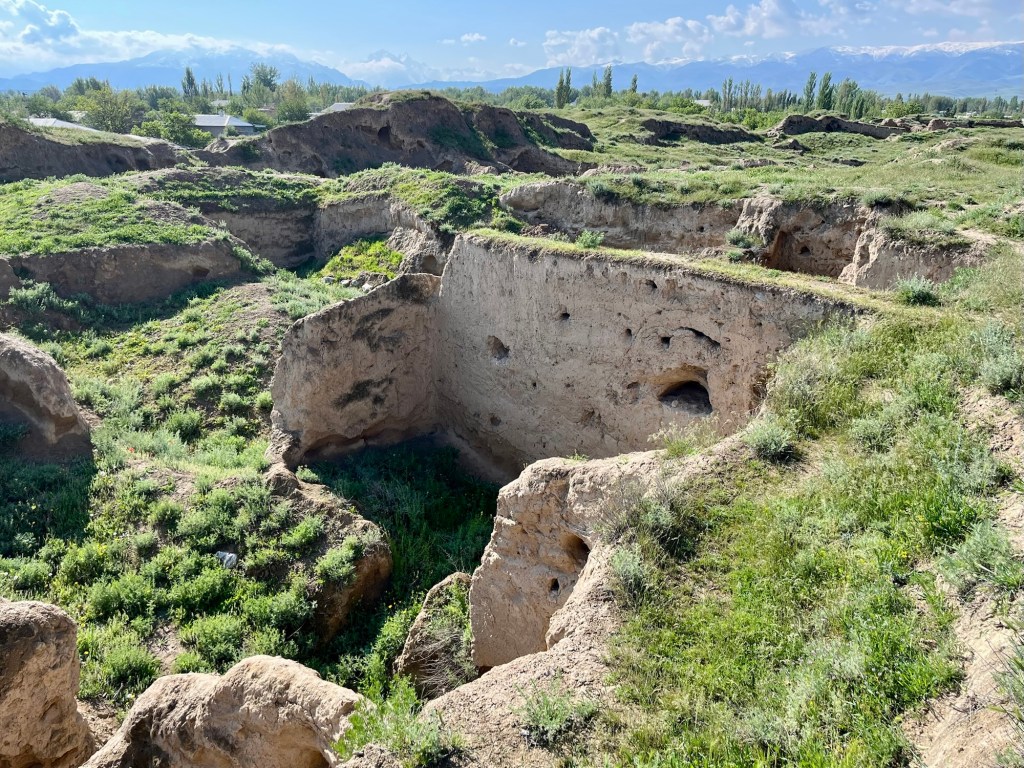
The ruins are mostly excavations. This is believed to have been the main marketplace:
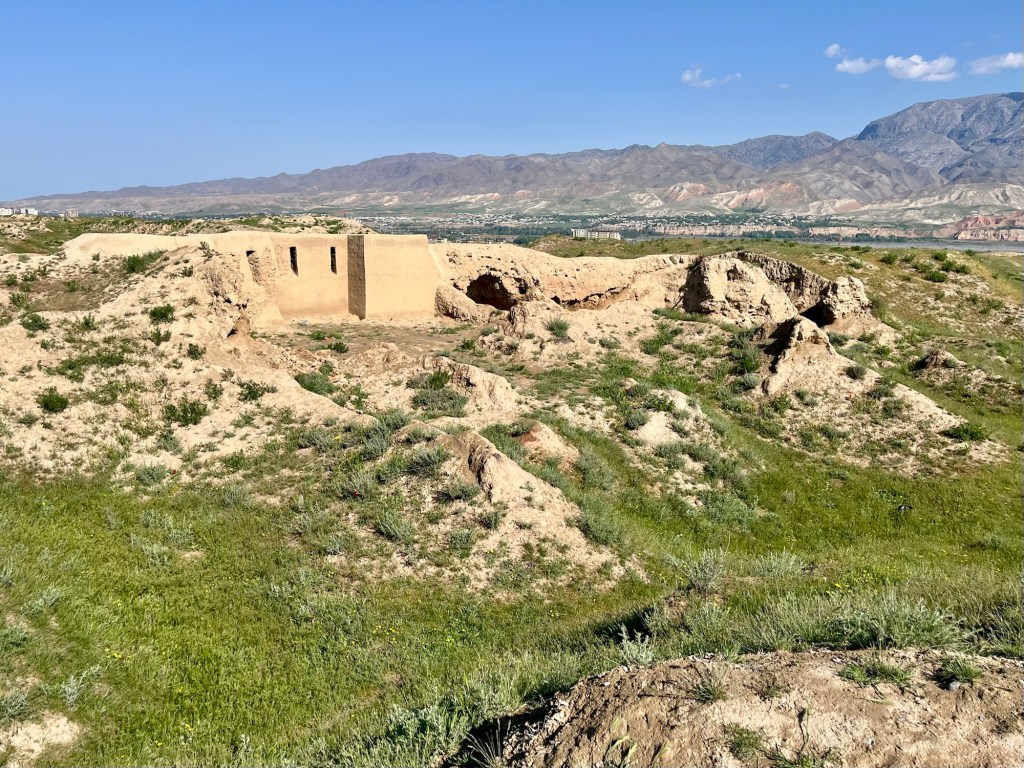
And this is a reconstruction of the Zoroastrian Temple, the religion most prevalent among the Sogdians before the Arabs arrived and converted them to Islam.
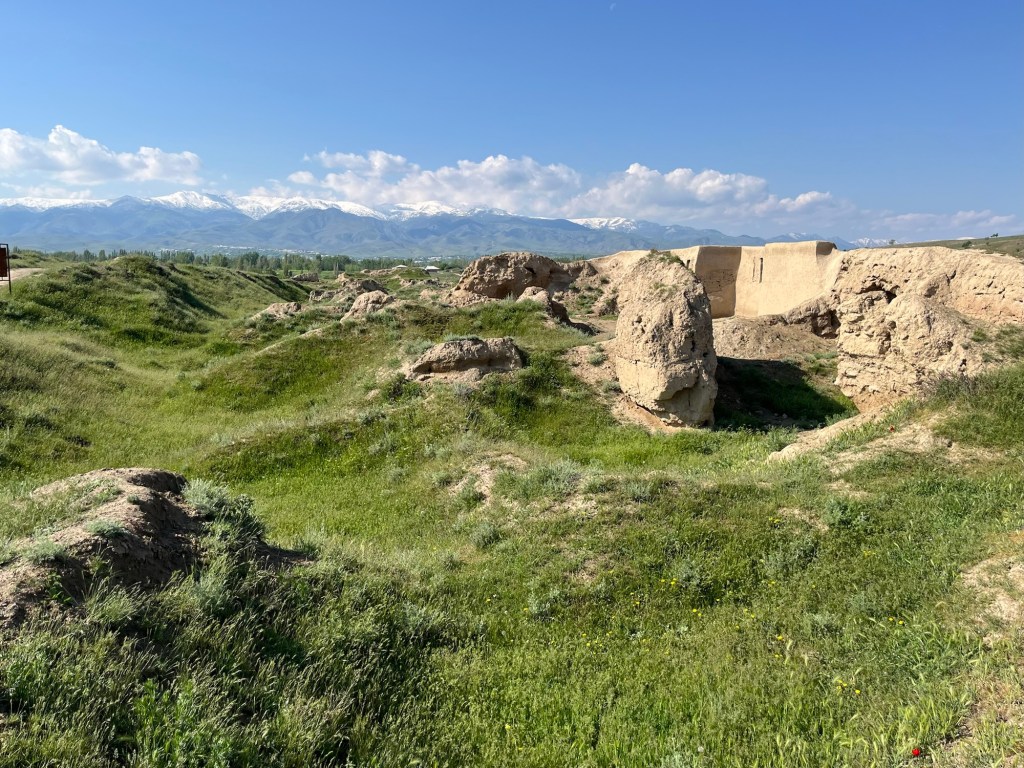
This is another view of the temple with the Fann Mountains, where we hiked the day before, in the background.
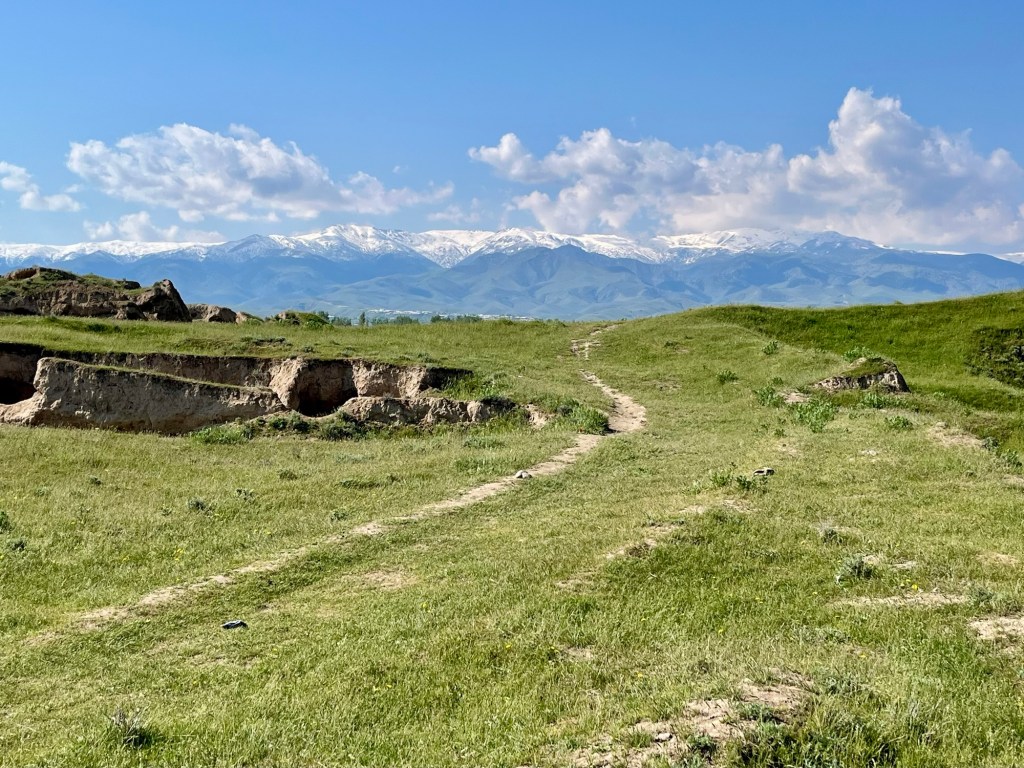
Along the northern wall of ancient Penjikent, we stopped to look down on the modern city. Our local guide told us that a handful of Sogdians still live here, able to trace their lineage through the centuries.

We headed back to where our van driver waited for us…
… then returned to modern-day Penjikent to visit the local bazaar where they literally sell everything from soup to nuts.

From the bazaar, we stopped briefly at the Rudaki Museum where a few artifacts from ancient Penjikent are housed, then returned to the hotel to pick up our luggage before driving back to the Jartepa border crossing for our return to Uzbekistan.
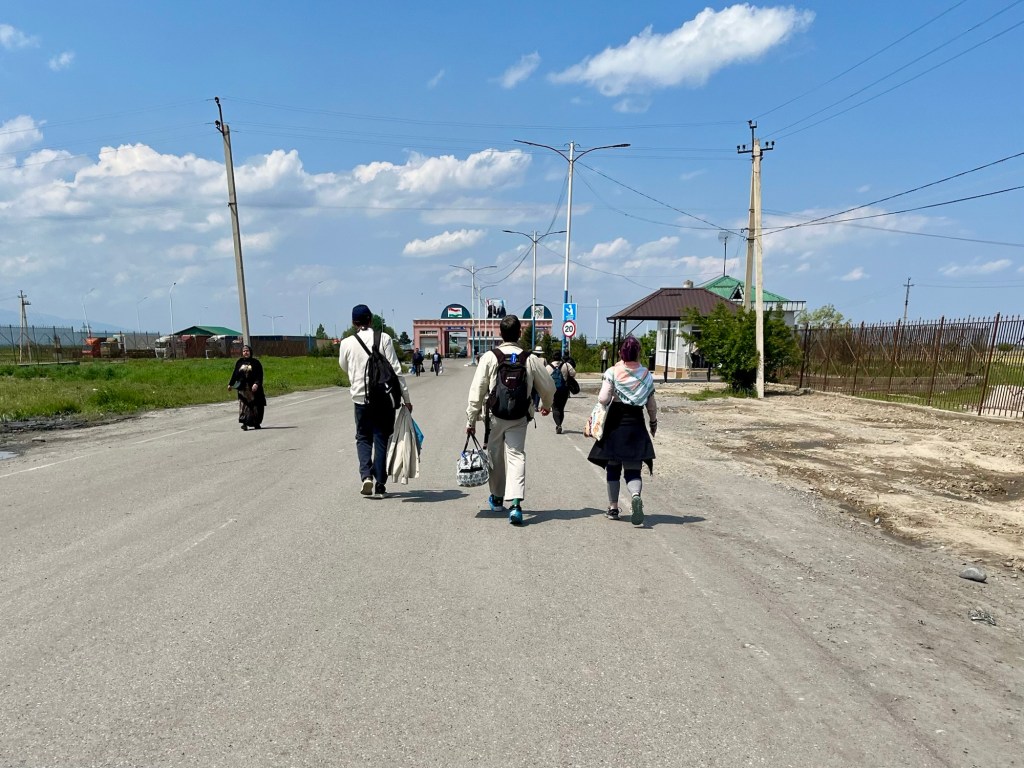
No funeral crashers this time.
 The Road Less Traveled