We took two days to travel from Kuching to Sandakan, stopping to spend the night in Kota Kinabalu, the capital of Sabah, at the Hyatt Centric hotel. Here’s the view from the restaurant at the top of the hotel.
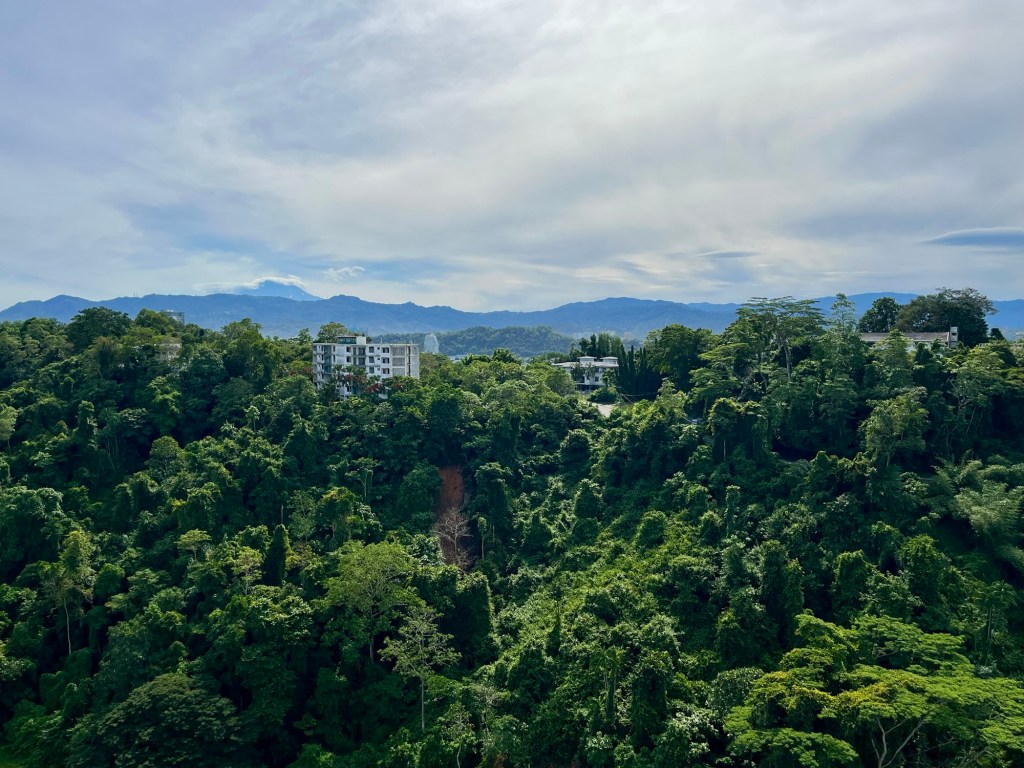
Air travel in this part of the world is notoriously unreliable, so caution and scheduling issues were the reason for our overnight in Kota Kinabalu.
The day after our arrival in KK (as the locals call it), we flew to Sandakan and checked in at the Sepilok Nature Lodge.
[Note for travelers: the airplanes used here are not designed for tall people. Unless you’re a contortionist, book upgraded legroom seats if the option is available.]
Our villa at Sepilok made us really feel like we were in Borneo. Here’s the lodge and restaurant:
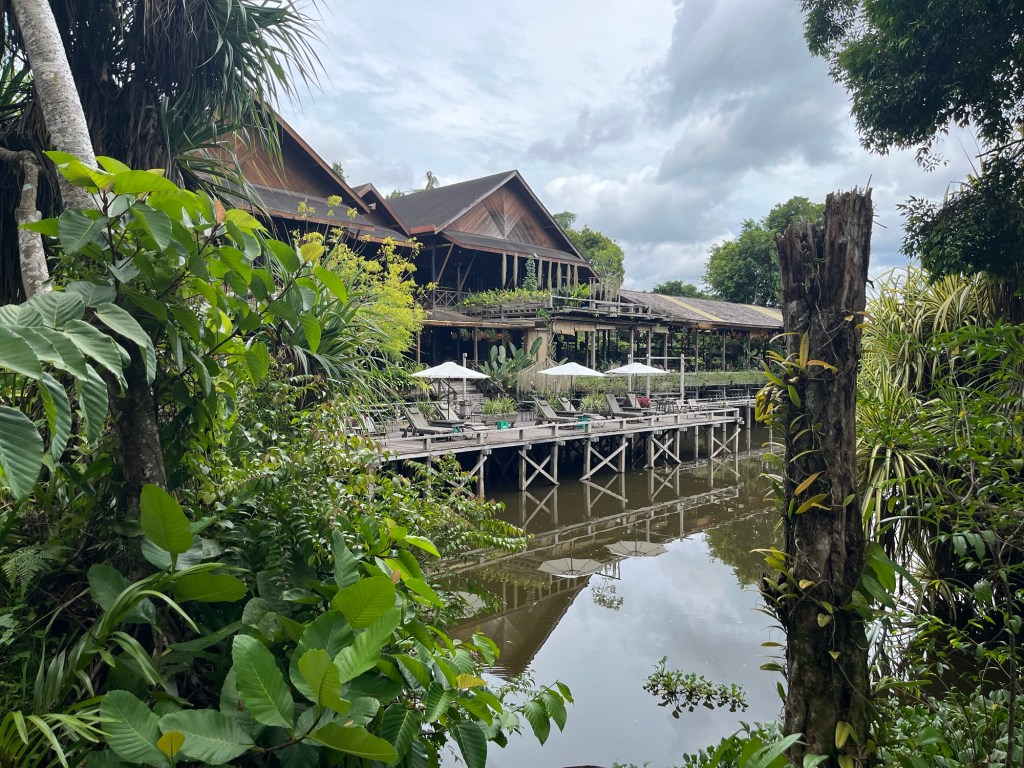
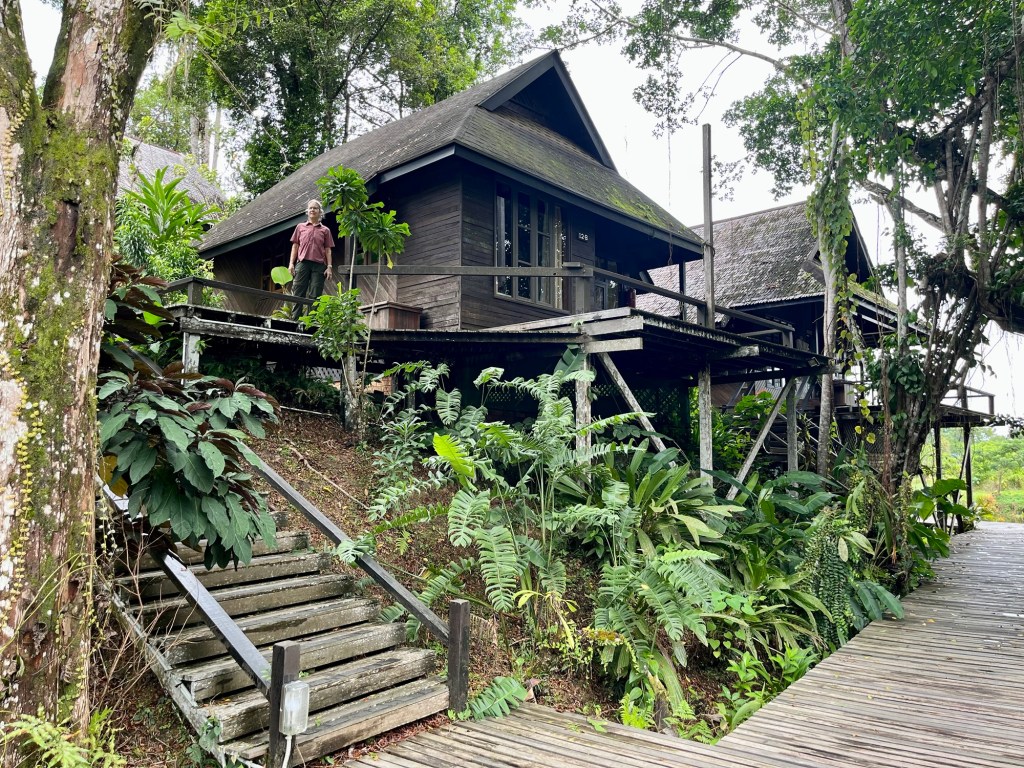
And this was our villa:
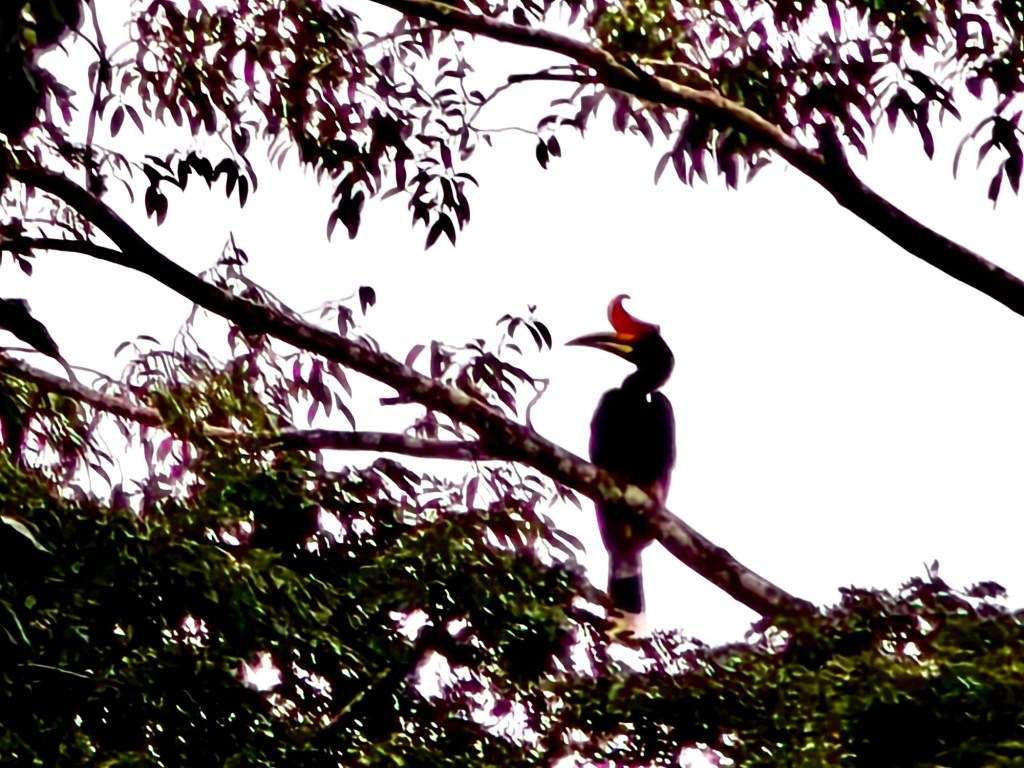
Right out front we saw our first unusual bird, an Oriental Pied Hornbill.
Our main reason for coming to Sandakan was to visit the Sepilok Orang Utan Rehabilitation Centre, administered by the Sabah Wildlife Department and established in 1964 to rehabilitate orphaned, injured or displaced orangutans for placement back into the forest.
The orangutans live in the wild and human visitors are contained inside a viewing facility. Kind of like a reverse zoo.
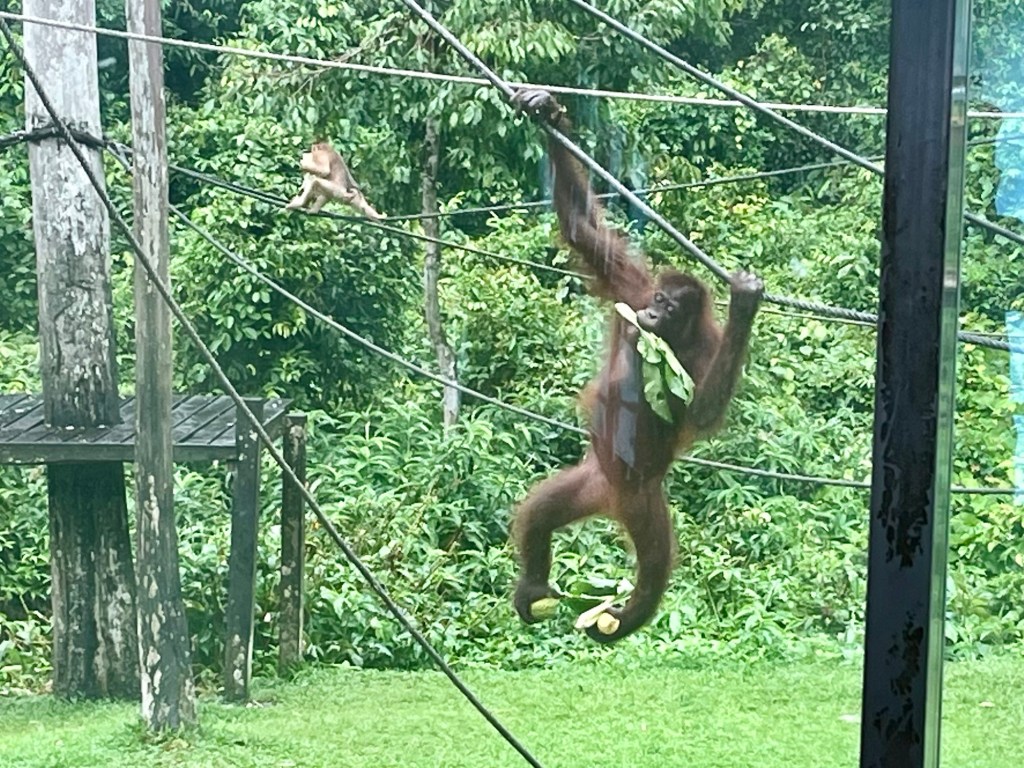
We were told that the glass is transparent in only one direction, so we could see them, but they couldn’t see us. Unfortunately, it also turned my photos greenish.

Orangutans are one of only five ape species on the planet. Apes do not have tails; monkeys do. The other apes are: gorillas; chimpanzees; gibbons; and, bonobos. If you wanted to make it six, I guess you could add humans. At least a few of them anyway.
The orangutans all show up on schedule at the observatory at feeding time, twice daily. Bananas appear to be a favorite.
I enjoyed watching this guy. He used his feet to grab extra food.
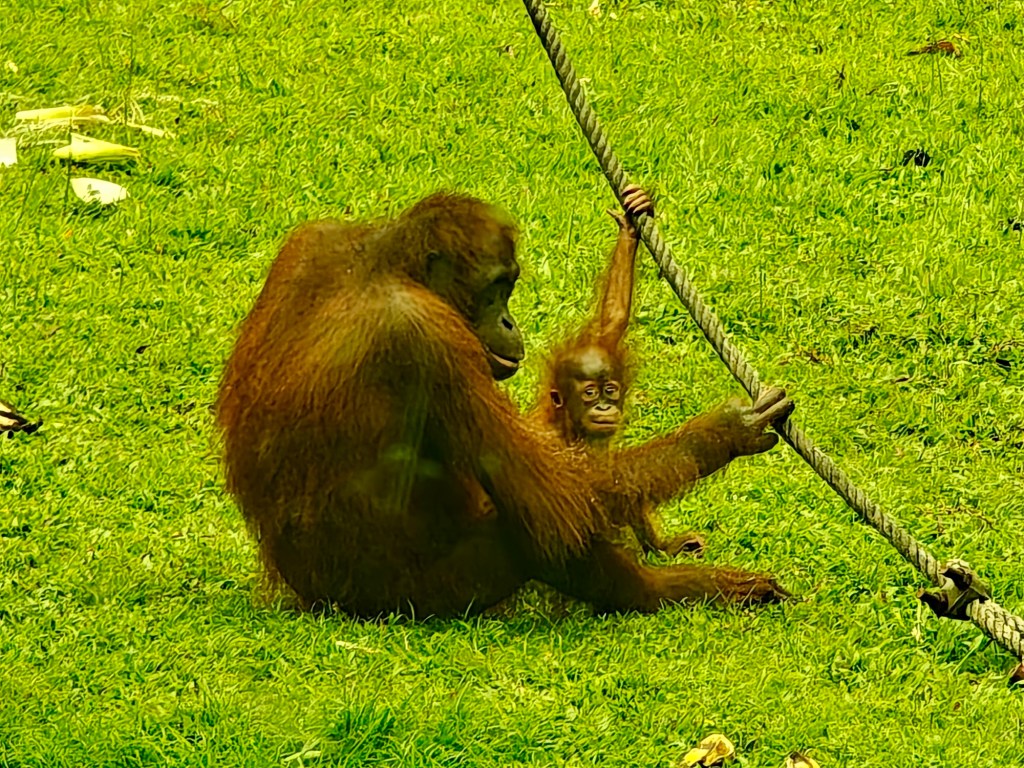
Mother and child.
Siblings?

Leaving the observation area, we headed over to an outdoor viewing area for feeding time dominated by an alpha-male:
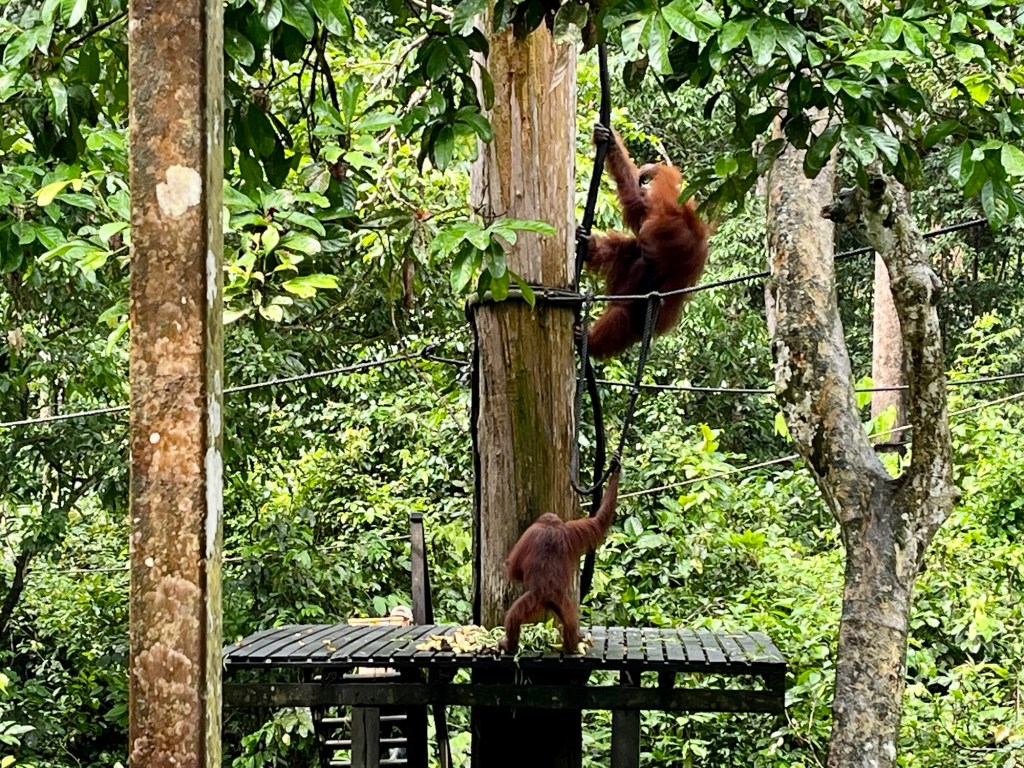
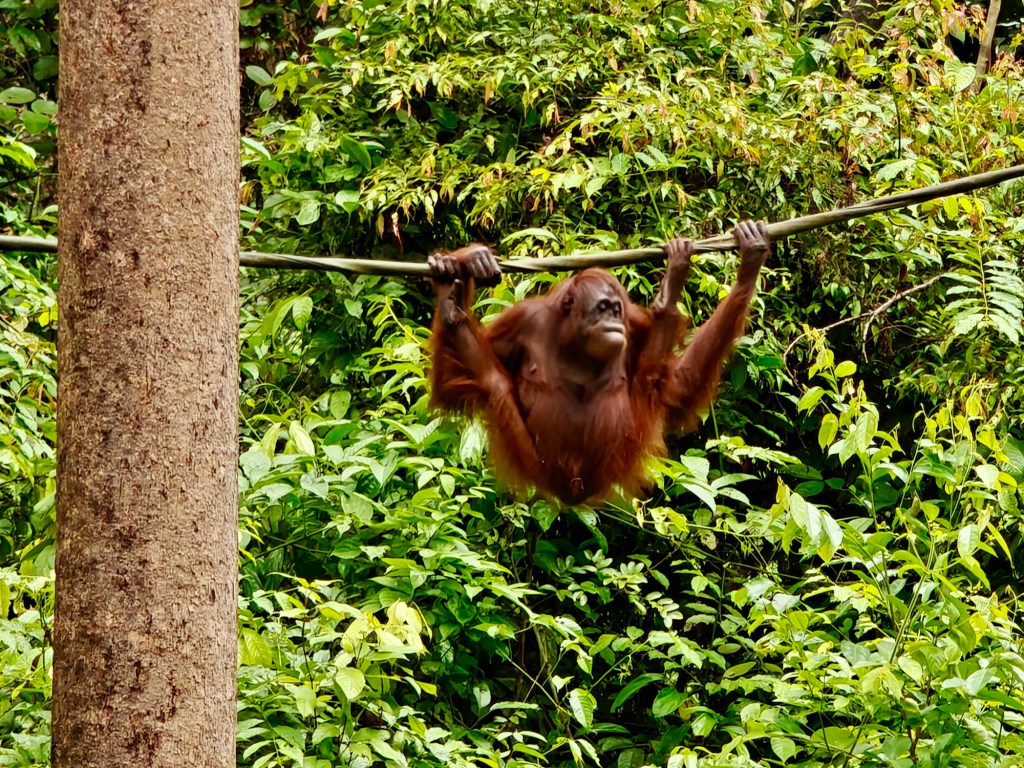
Orangutans are quite smart. The big guy, above, didn’t like people watching him eat, so he turned his back on us. His little cousin wasn’t so shy:
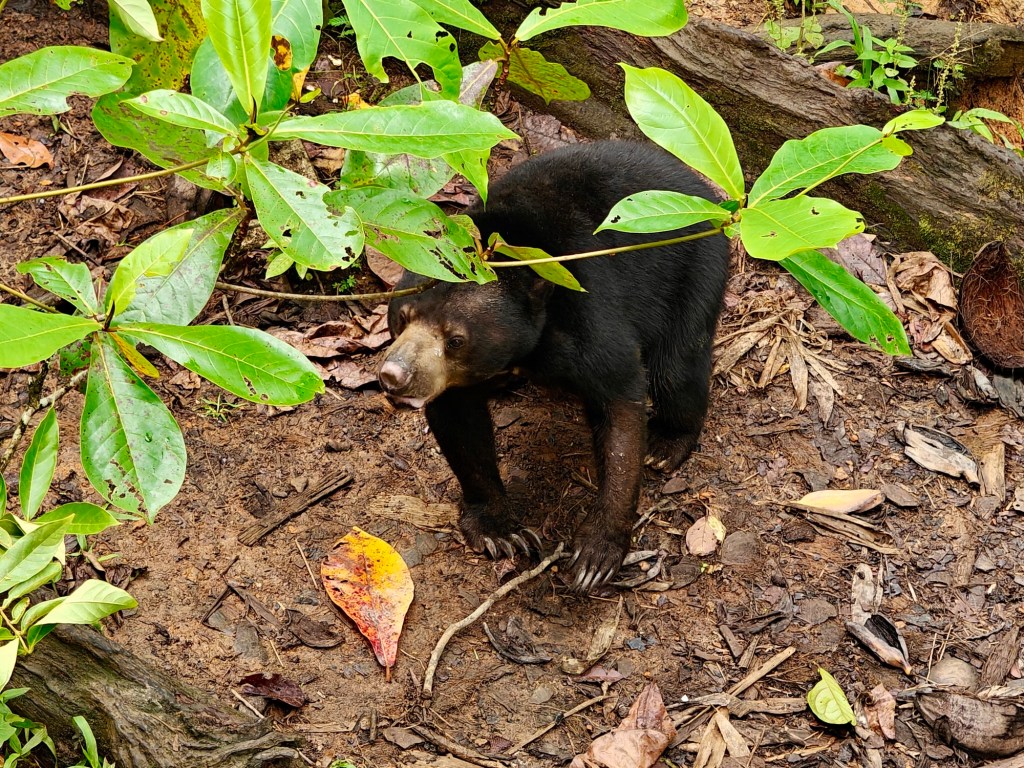
Nextdoor is the Bornean Sun Bear Conservation Centre, a sun bear rescue and rehabilitation facility whose mission is similar to that of the Orang Utan Rehabilitation Centre, but for sun bears.
Sun bears are the smallest bears in the world and are only found in Southeast Asia. They are threatened by forest degradation, illegal hunting, and poaching to obtain young cubs for the pet trade.
There are currently 41 rescued ex-captive sun bears residing at the Sun Bear Centre. Domesticated sun bears develop atypical habits, like pacing, due to being caged or living with limited outdoor access.
The viewing platform at the Sun Bear Centre is elevated, making it difficult to photograph the bears. Here’s the best I could do:
Also nearby is the Rainforest Discovery Centre, a canopy walk through a primary forest. We started while the sun was still up, searching for…
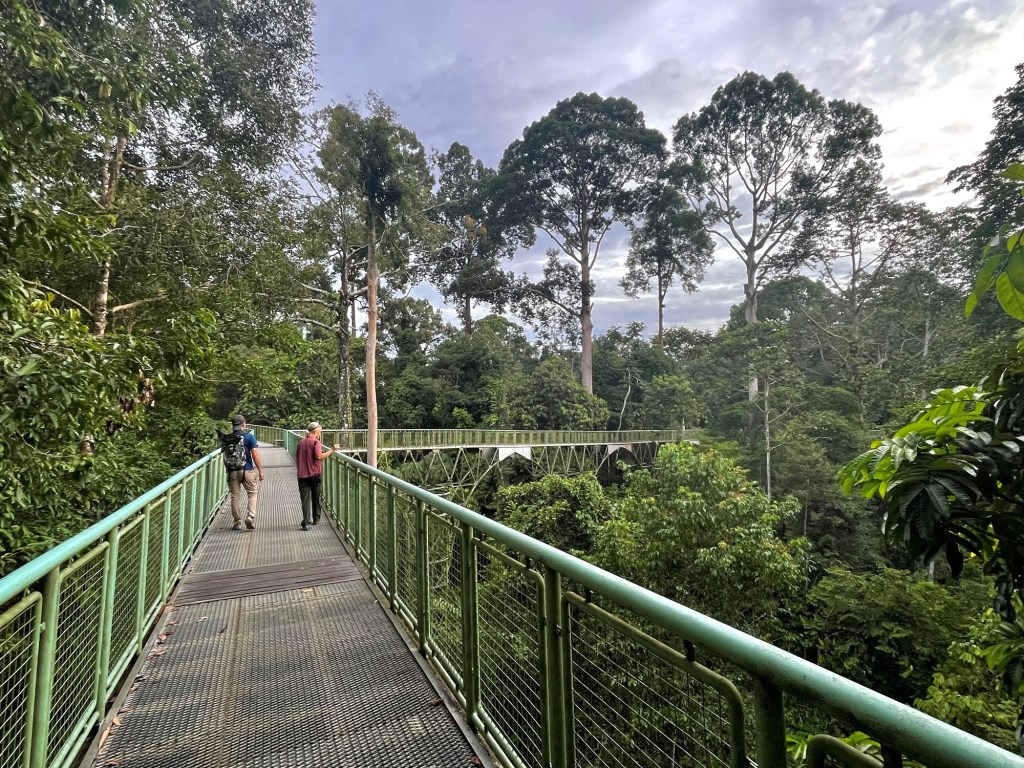
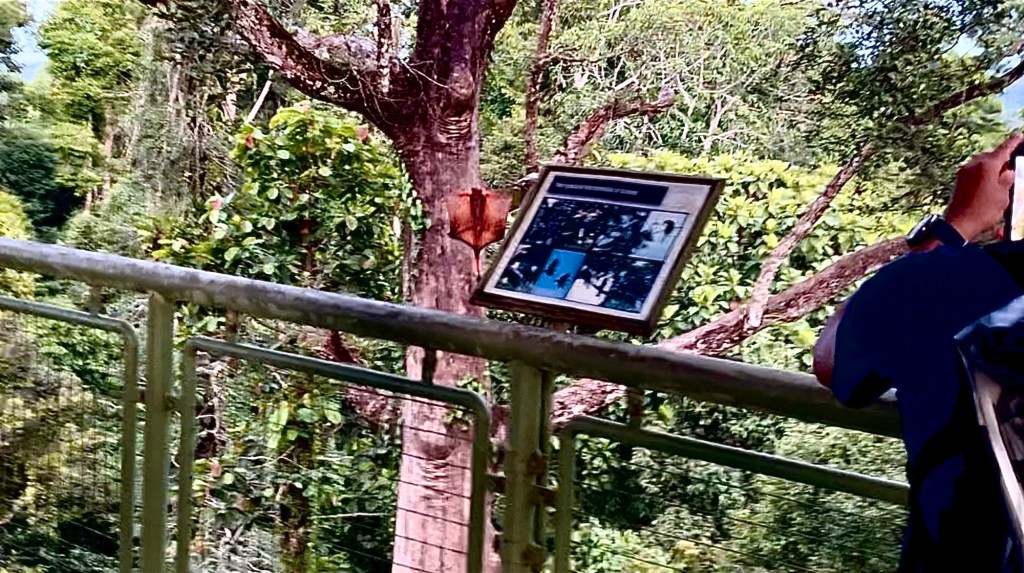
… the Red Giant Flying Squirrel. At the top of the highest platform, we spotted one. He launched himself into the air and swooped right past us, feathering out and landing on a nearby tree. That’s him in the photo below, just to the left of the information placard, about to land.
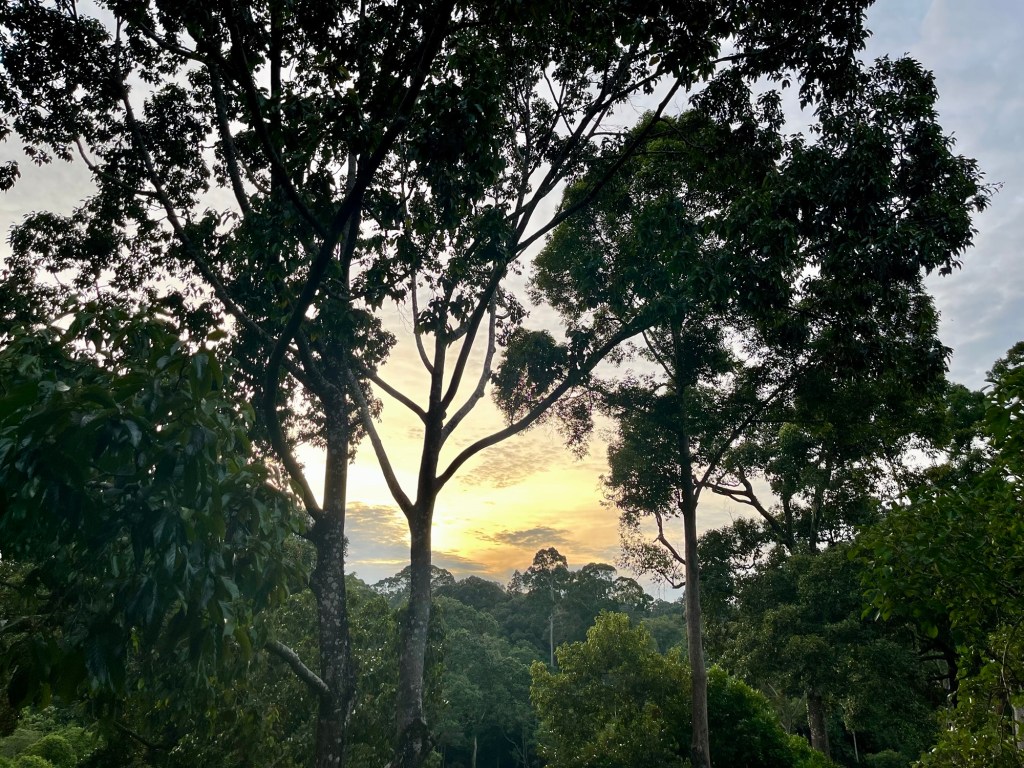
The sunset was beautiful.
Once the sun had gone down, a ranger joined us and led us on a night walk. We found (clockwise from left):
- Slow Loris, a nocturnal primate with a venomous bite;
- Scorpion (shown under blue light), also venomous; and,
- Rock Frog (I think that’s what they called it) – can you tell which is a rock and which is a frog?

 The Road Less Traveled
amazing picture and wild live to watch with so much respect for the urang Utan 🙏🏻