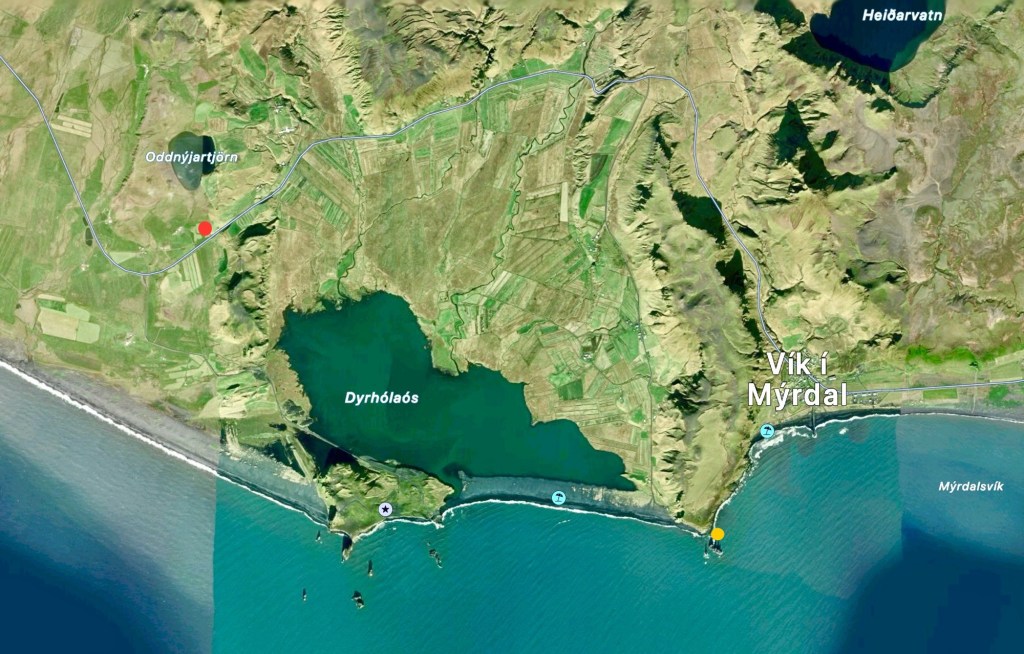
We spent two days exploring the southernmost point of Iceland, shown on the map, below. Our lodging at the Volcano Hotel is marked by the red dot. The nearby town of Vík, also known as Vík í Mýrdal, is labeled. It’s the southernmost town in Iceland, population about 750.
The other locations to take notice of are: the black sand beach called Reynisfjara, indicated by the blue dot with the umbrella; the yellow dot marking the basalt sea stacks known as Reynisdrangar; and the Dyrhólaey peninsula, indicated by the silver dot with the black star.
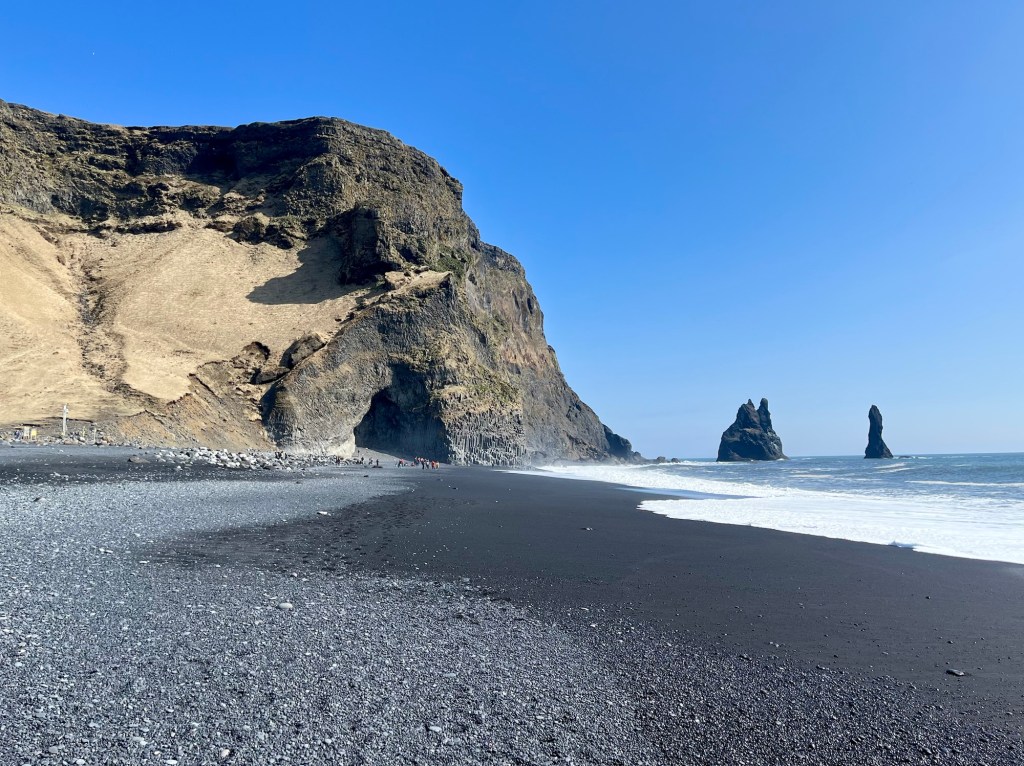
First up, Reynisdrangar. That’s those odd looking islands in the photo, below. They are typical sea stacks, that is, volcanic rock left standing after the softer surrounding rock has been eroded away by wave action.
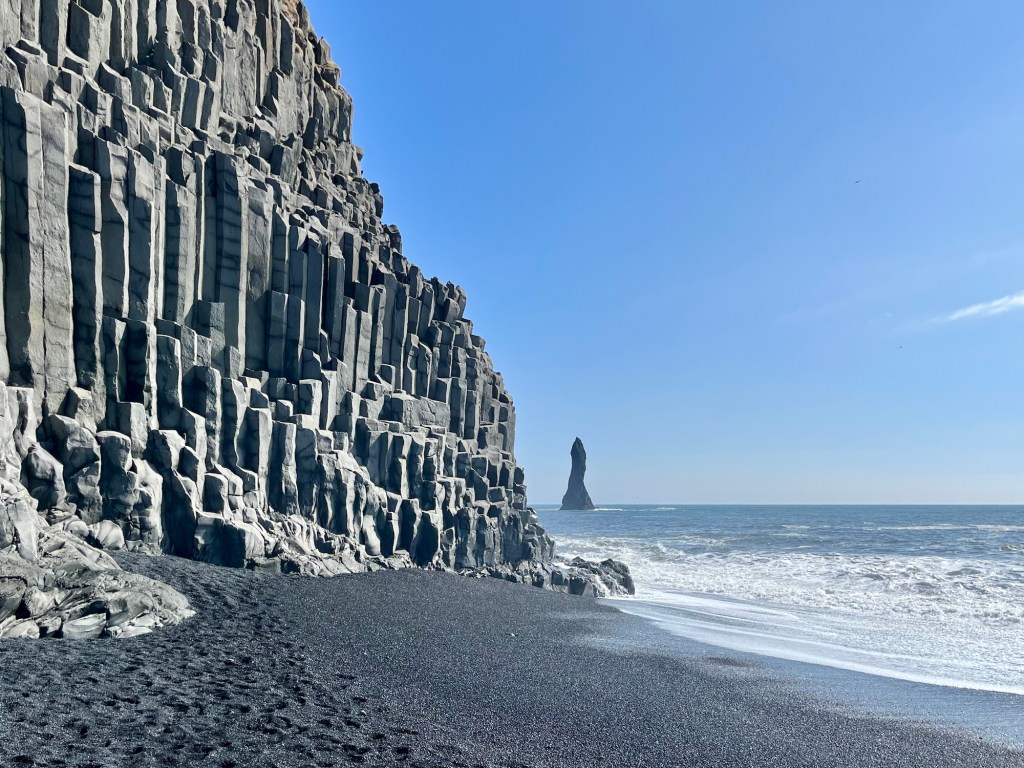
In this case, the stacks are basalt, an igneous rock that is essentially cooled magma. It is crystalline which causes it to sometimes have a linear appearance like the basalt columns on shore, shown below.
This whole area is volcanic rock in various states. Reynisfjara black sand beach is composed of broken and worn down fragments of hot lava that was expelled by the adjacent Katla Volcano into the frigid water of the North Atlantic where it exploded into bazillions of these little pebbles.
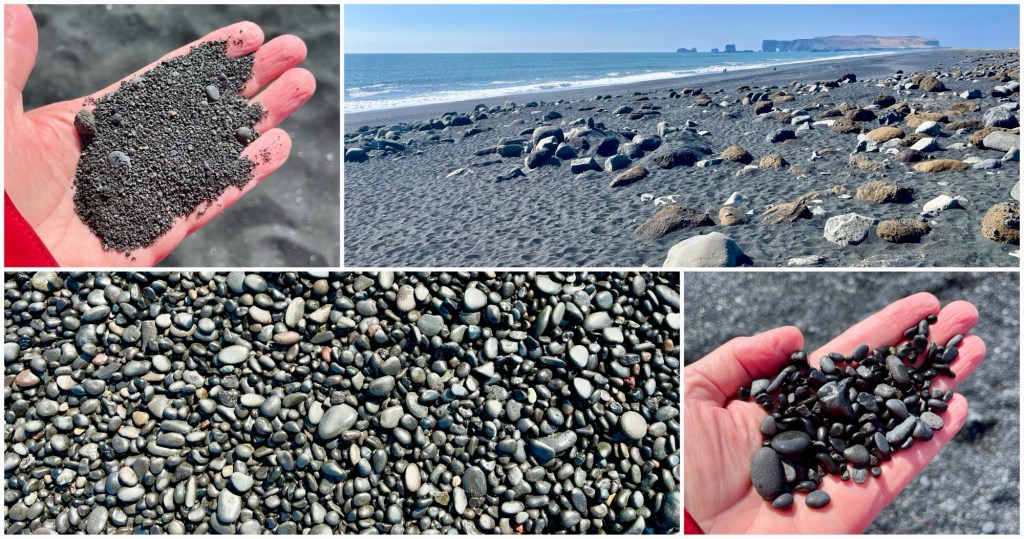
Looking east from the basalt columns, the Dyrhólaey peninsula was visible in the distance.

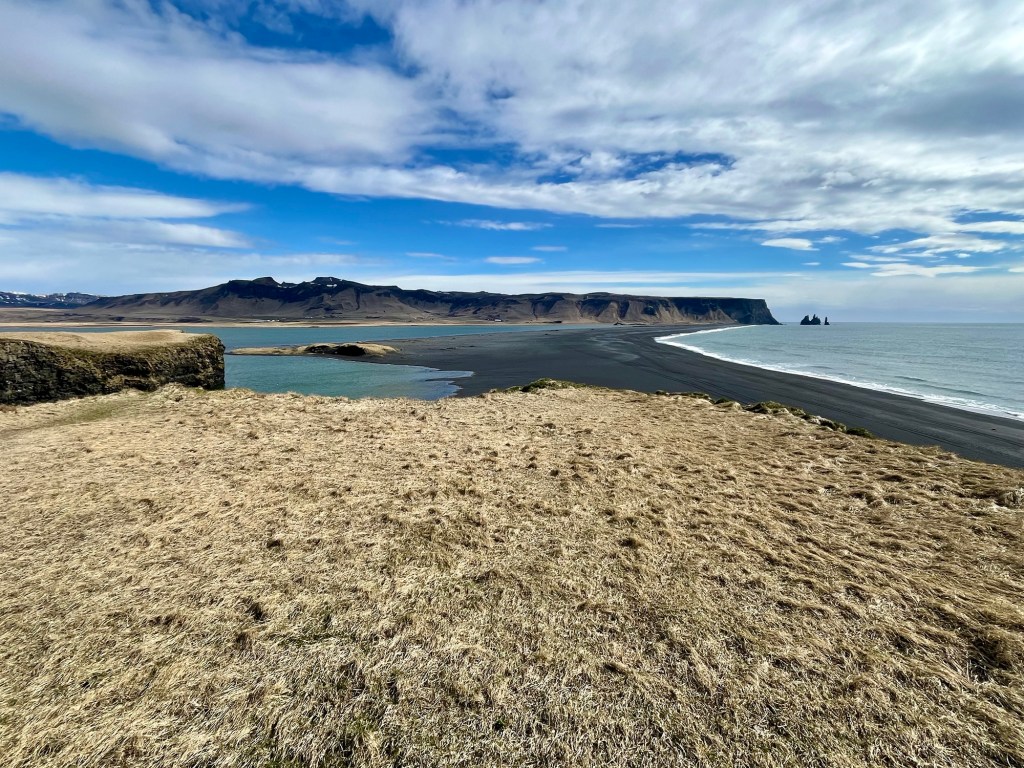
We drove over there on our second day here. The photo, below, is from the top of the peninsula, looking back across Reynisfjara beach at the Reynisdrangar sea stacks.
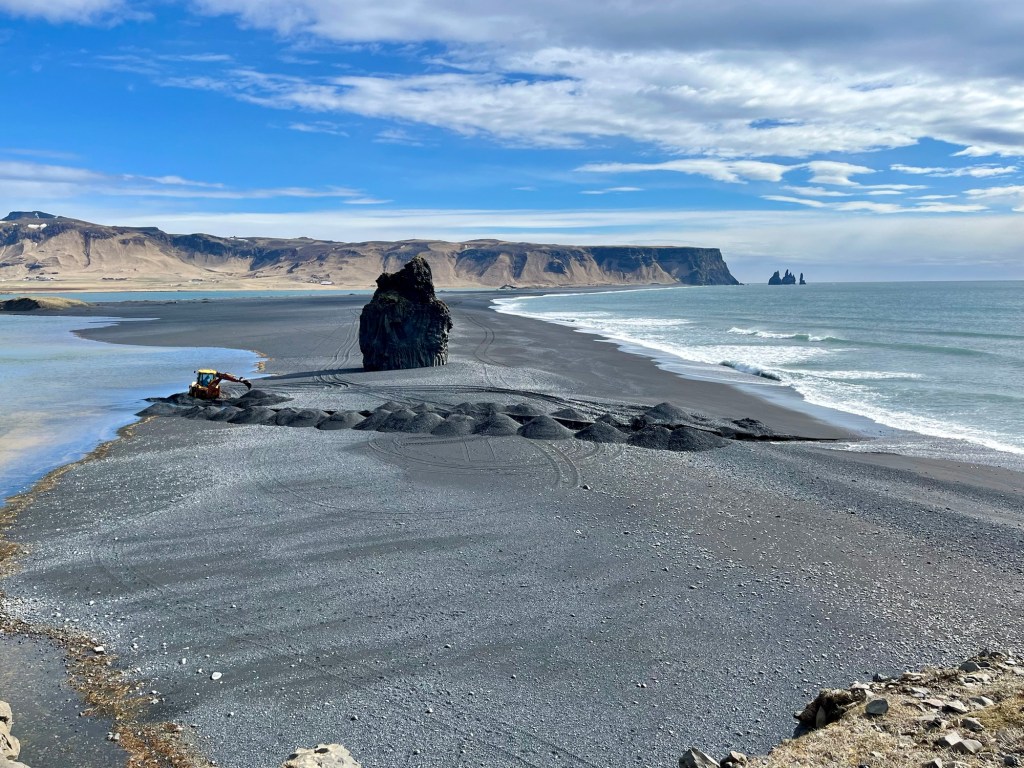
Moving closer to the cliff edge, we looked down at the nearer beach where we saw a guy in a backhoe cutting a trench to drain the adjacent stagnant bay. Looks like a futile effort to me.
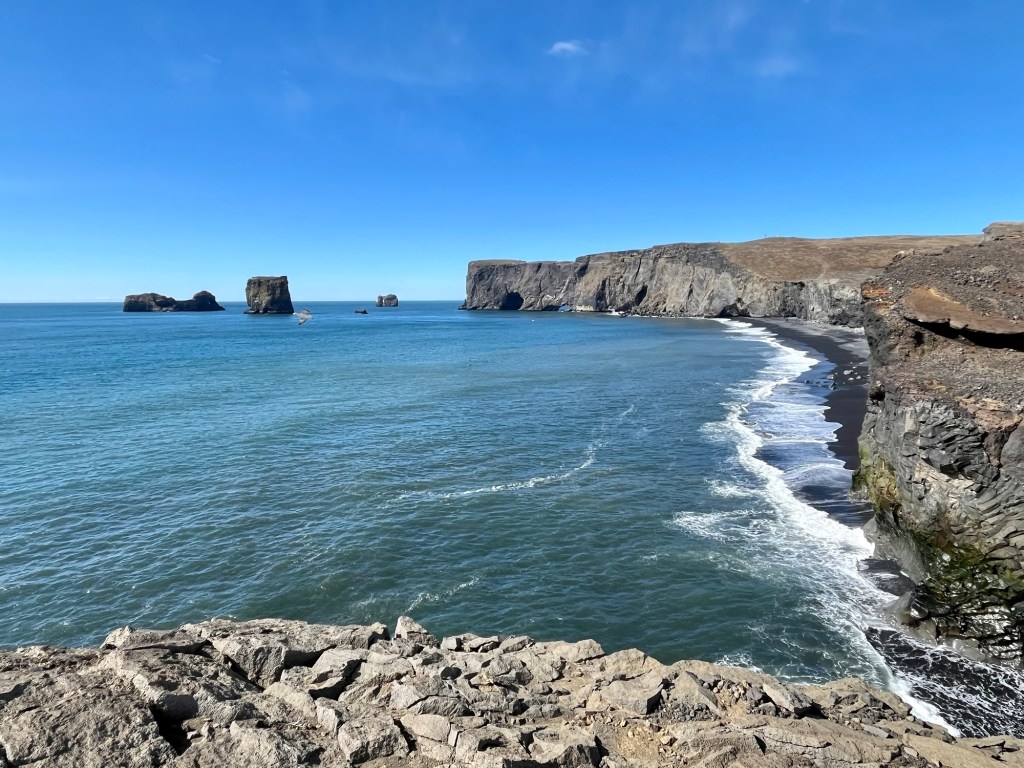
On the very top of the peninsula there were remnants of what appeared to be cleats. Dale read somewhere that these were used sometime in the past to raise a wrecked boat here.

We hiked further along the peninsula. That’s the far eastern end of it. You can’t see it from here, but there’s a lighthouse on the point. We decided to walk over to it.
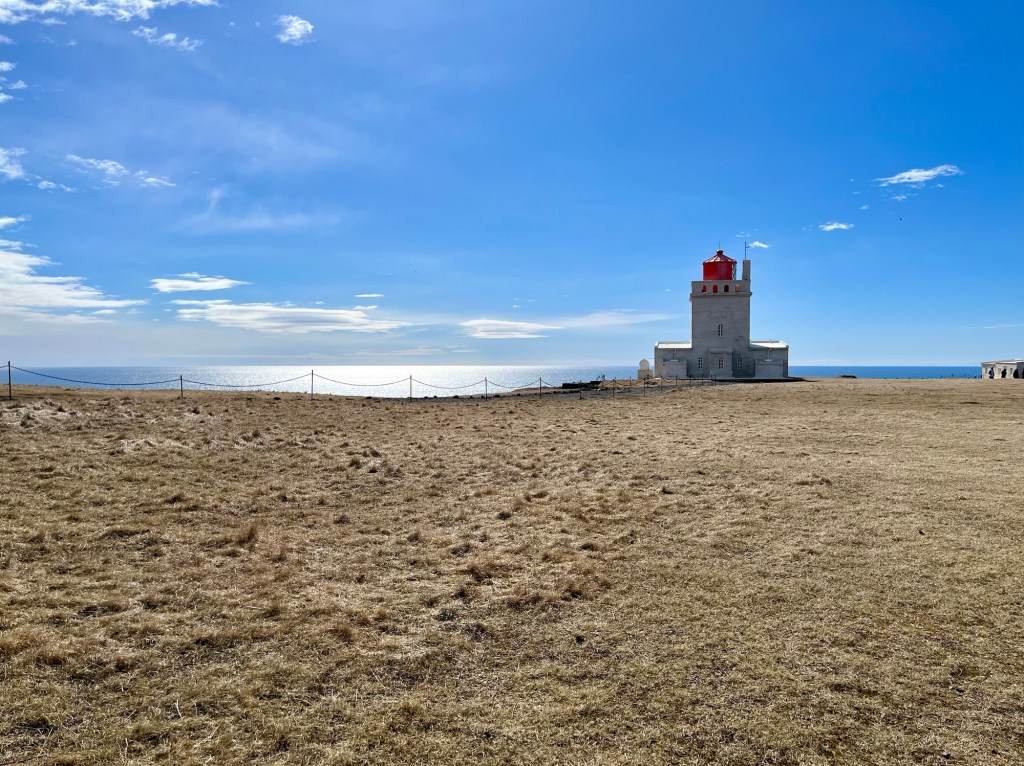
Dyrhólaey Lighthouse marks the southernmost point of Iceland. A lighthouse was first established here in 1910. The current lighthouse was built in 1927.
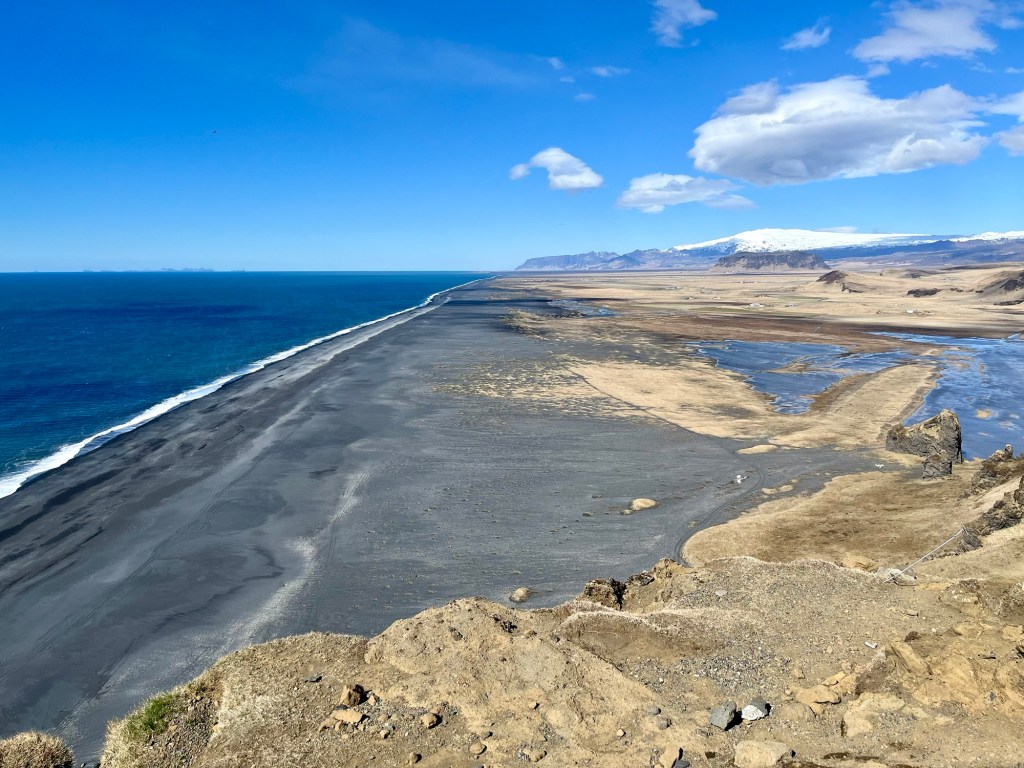
Looking further east from the lighthouse, the black sand beach continues, although it’s harder to get to and seems to have been ignored by the tourism industry.
Driving back to our hotel, we passed this rather typical scene with a subterranean pen for livestock, typically sheep.

In case you haven’t noticed, the weather has continued to be magnificent. The only other place I remember seeing skies like this is Montana, “Big Sky” country.
 The Road Less Traveled
beautiful!
LikeLiked by 1 person
Pingback: Snæfellsnes | The Road Less Traveled