There’s a Crosby, Stills & Nash song called Southern Cross that has resonated with me since it became a hit in 1982. Written by Stephen Stills, it tells the story of a physical and spiritual voyage he took from California to Tahiti. In case you don’t know, the Southern Cross is a constellation only visible in the southern hemisphere.
The first verse goes like this:
Got out of town on a boat going to Southern islands
Sailing a reach before a following sea.
She was making for the trades on the outside
And the downhill run to Pape‘ete.
Pape’ete is on the island of Tahiti. It’s the capital city of French Polynesia and the largest town in the Society Islands. Other islands you might have heard of in the Society archipelago include Bora Bora, Ra’iātea and Mo’orea, which we will be visiting next.
Here’s a photo of downtown Pape’ete:

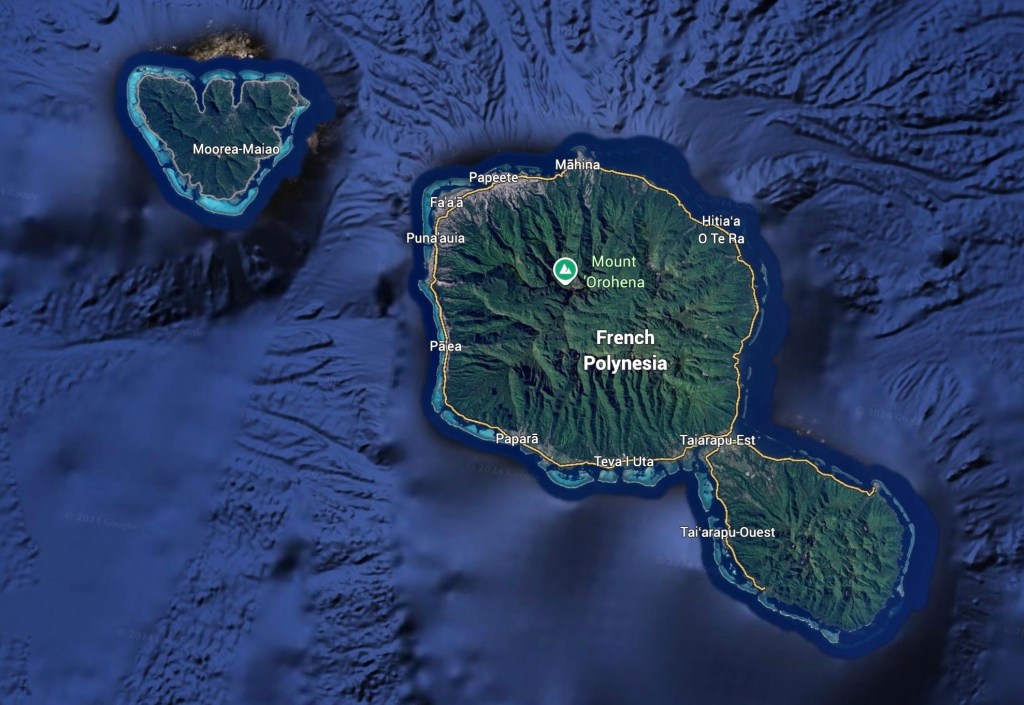
We rented a car for the day and drove clockwise around the island. By the way, the island of Mo’orea (left, below) is only about 25 miles west of Pape’ete.
The island of Tahiti consists of two volcanic islands attached to one another: the larger, northwestern Tahiti Nui, and the smaller – and mostly unpopulated – Tahiti Iti, to the southeast.
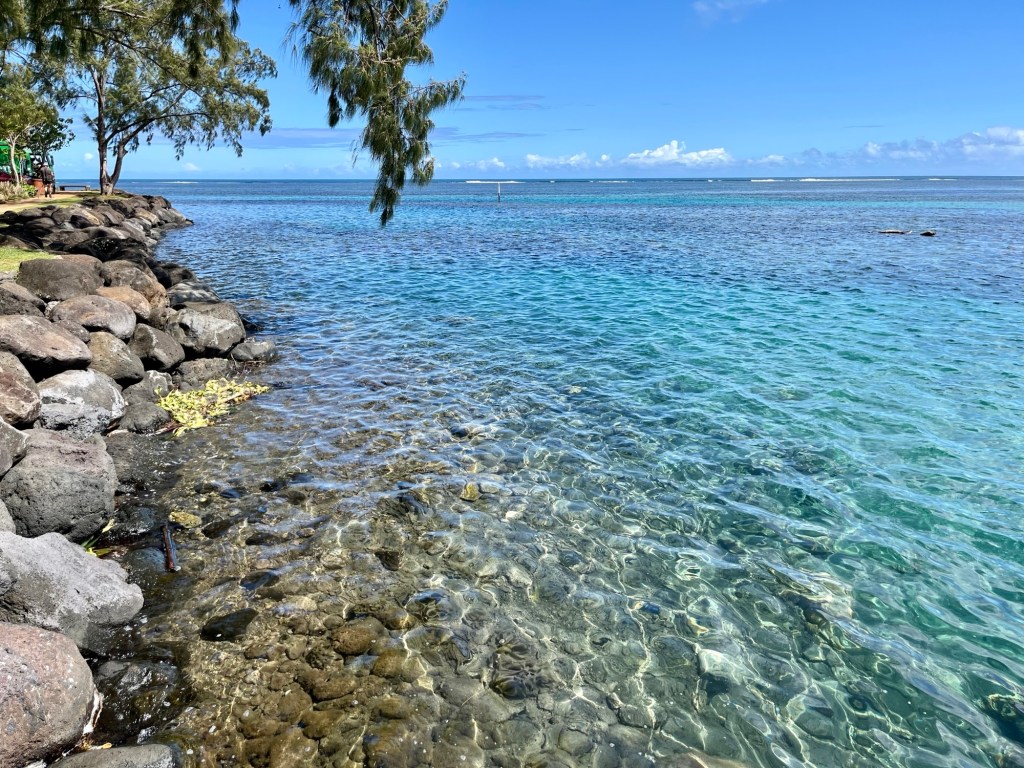
I’m familiar with the waters of the Bahamas and other parts of the Caribbean. The clarity of the inshore waters of the Pacific Ocean is even more spectacular.
Tahiti is famous for several things:
Capt. James Cook (1728-1779), the famous British mariner and explorer, landed here in 1769 to set up an observatory to record the transit of Venus.
The infamous Mutiny on the Bounty occurred here in 1787.
Paul Gauguin (1848-1903), one of our favorite Impressionist artists, lived and painted here during the 1890s.
And French Polynesia is generally known for its outrigger canoes, still in use today:

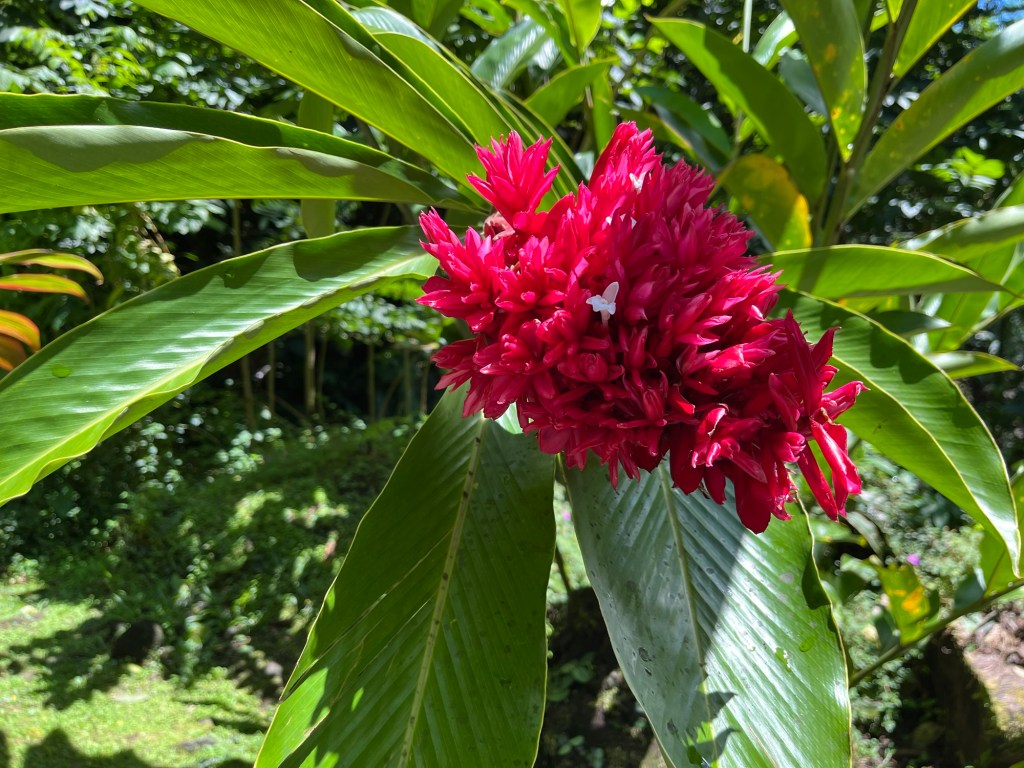
Along the north shore, we stopped to look at a waterfall, surrounded by lush vegetation, including red ginger, pictured, below.
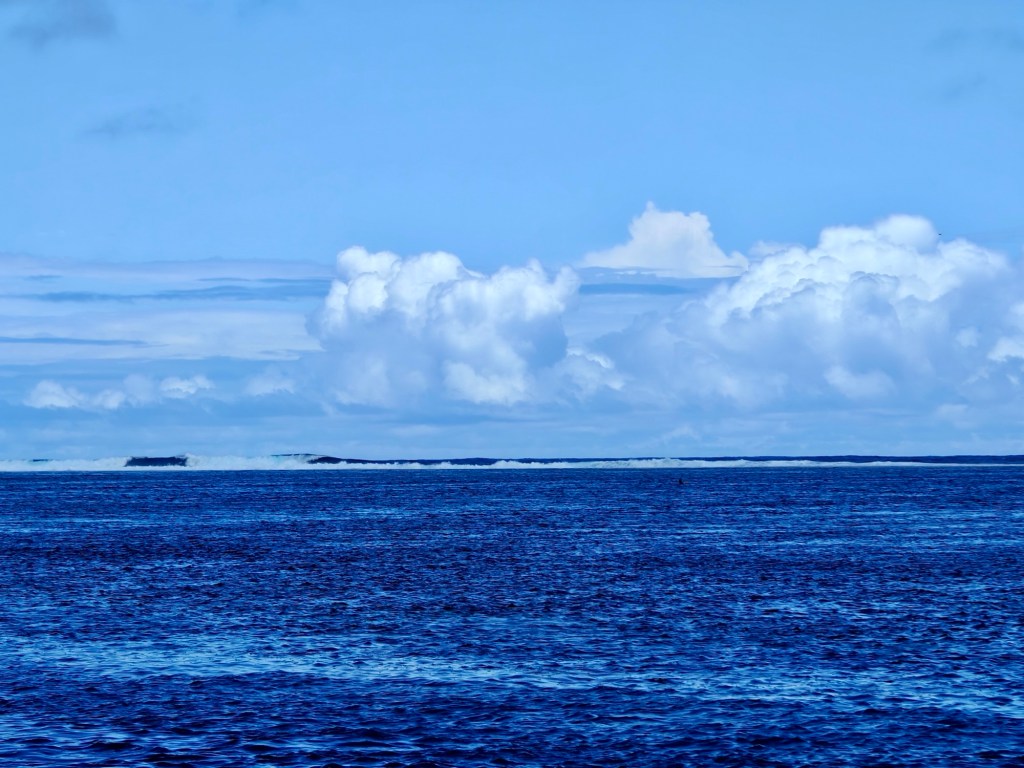
At the connection between Tahiti Nui and Tahiti Iti, we continued southeast to the only settlement of note there, Teahupo’o. The surf break at Teahupo’o is well known in the surfing community, but it wasn’t until this year that it became known to the wider world. The reason? The 2024 Summer Olympics Surfing Competition was held here.

That’s the famous break, below, in the distance. It seems that Teahupo’o is left breaking wave.
Since there are no accommodations or other tourist facilities in Teahupo’o, there were no spectators at the competition. In fact, the 48 surfers that competed, 24 males and 24 females, had to be housed on a passenger/cargo vessel anchored offshore, from which they were ferried to the reef to surf.
If you’re interested, highlight videos of the competition can by found here or here.
This is the view on the point from which I took the photo above. Note the tall palm tree. It’s actually a disguised cellphone antenna.

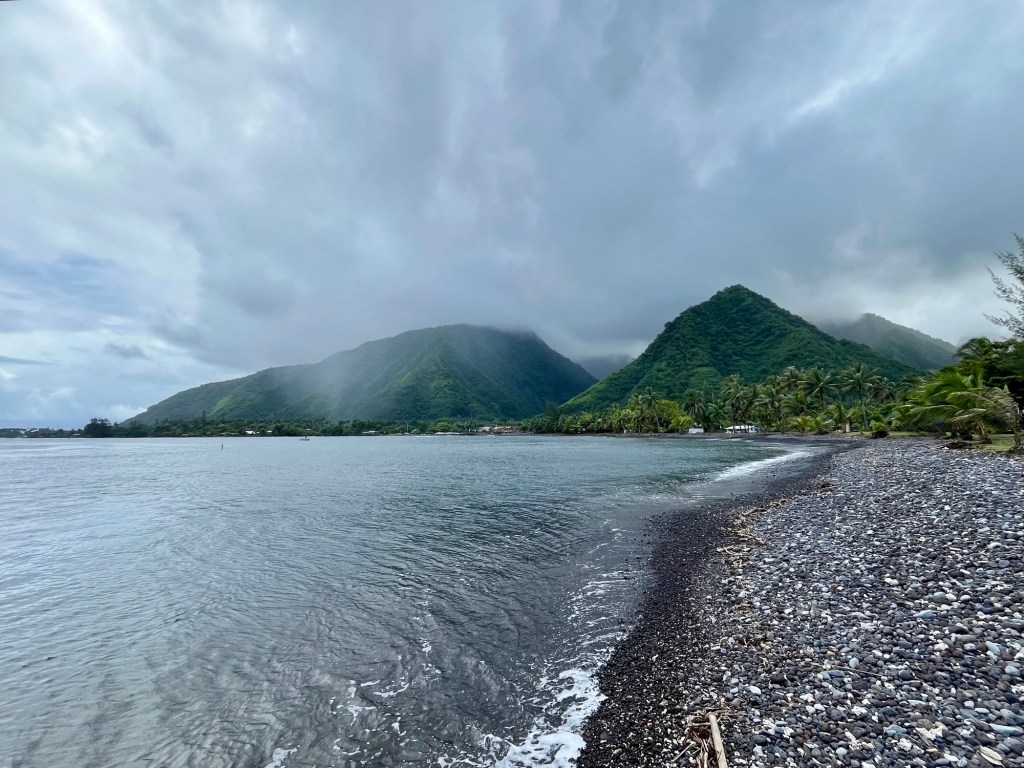
Here’s a photo from the same spot, looking in the opposite direction, Tahiti Nui in the distance:
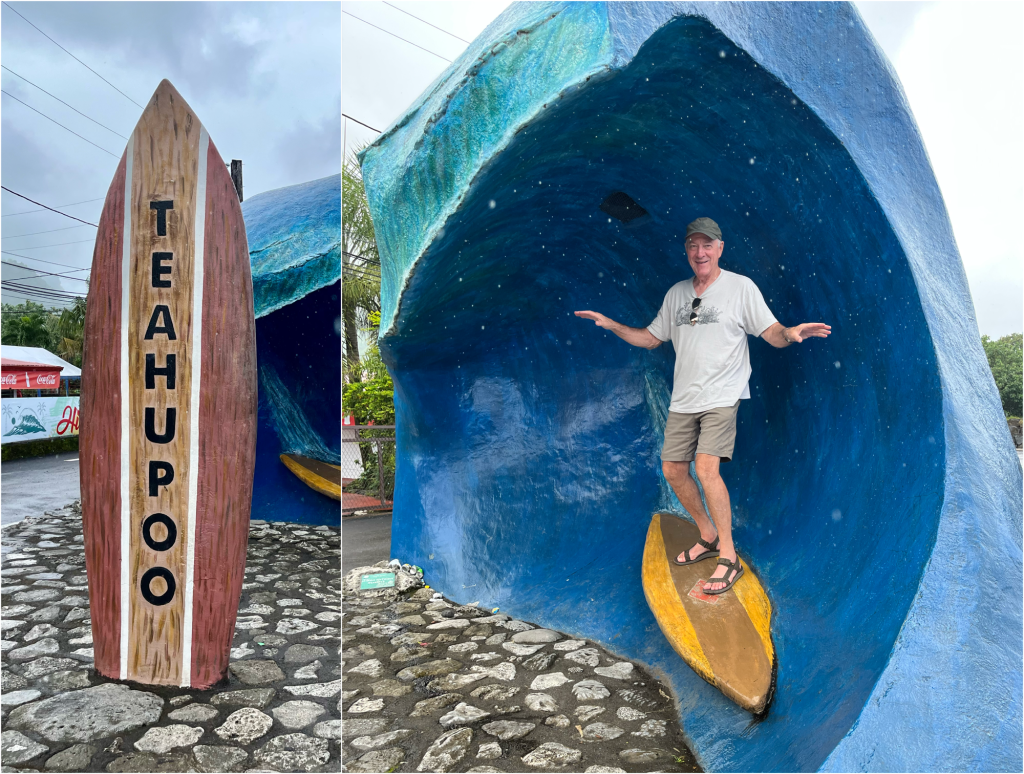
Too old now, I missed my opportunity to compete, having to content myself with this souvenir photo instead:
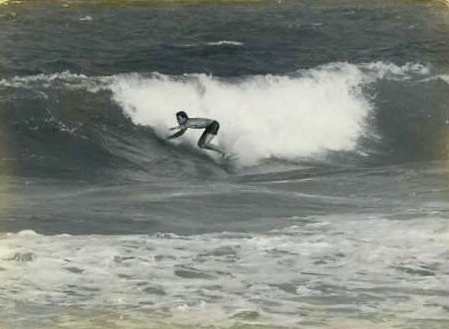
Back in the day, I preferred a right break anyway:
 The Road Less Traveled
Hey Mark,
Loved the pics of Tahiti. Is that really you surfing in the final photo?
Enjoy. Look forward to seeing you two when you’re back in G’ville.
Leanne
LikeLike
Yep, that’s me, 1974.
LikeLike
I’m so inspired and impressed by you two.
LikeLike